

Atlanta Truck Accident Attorney for 18-Wheeler and Jackknife Crashes
After a truck accident in Atlanta, the truck driver and the trucking company are usually responsible for your injuries. A freight broker, shipper, repair shop or truck manufacturer may share the blame. Interstate for-hire carriers hauling general freight in trucks of 10,001 pounds or more must carry at least $750,000 in liability insurance (49 C.F.R. § 387.9).
Most truck injury lawsuits must be filed within two years of the crash (O.C.G.A. § 9-3-33). Before founding Flack Injury Law, attorney Jonathan Flack spent two and a half years on the insurance side of commercial truck and tractor-trailer cases. He now represents injured people only. Call (678) 653-0309 for a free consultation. You owe no fee and no case costs unless we recover money for you.
in this section
Page contents
Atlanta Truck Accident Lawyer: Who Is Liable for a Truck Crash in Georgia
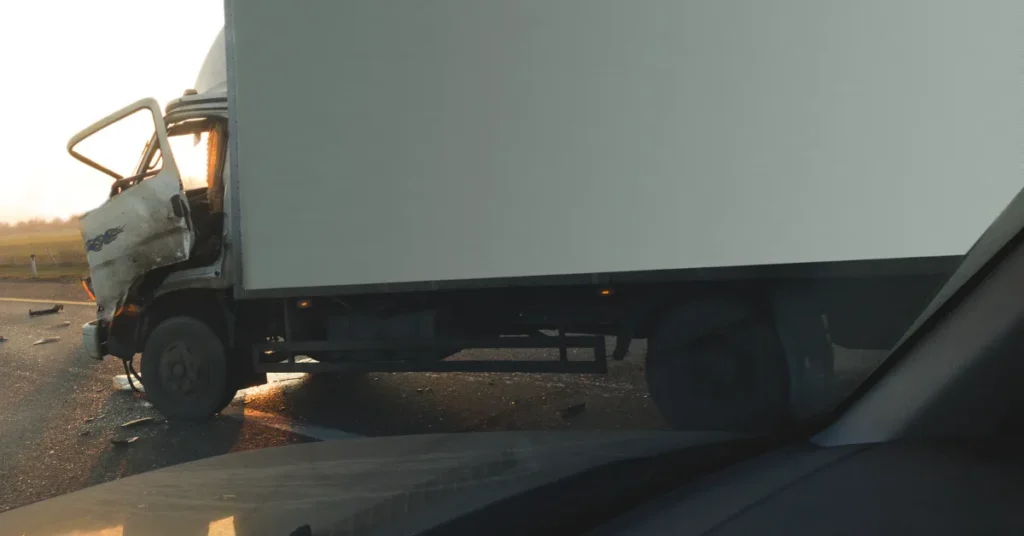
Georgia truck cases follow the same basic rule as car cases: whoever caused the crash through carelessness pays for the harm. The difference is how many parties may have played a part. A tractor-trailer crash often involves a driver, a motor carrier, a freight broker, a shipper and several insurance policies.
Federal safety rules apply to most commercial trucks on Atlanta interstates. They cover driver qualifications, driving hours, and inspection and maintenance (49 C.F.R. Parts 391, 395 and 396). A broken rule is often the clearest proof of fault, and the records that show it are in the trucking company’s hands.
You can still recover if you were partly at fault, as long as you were less than 50% responsible. Your award is reduced by your share of fault (O.C.G.A. § 51-12-33). Expect the trucking company’s insurer to argue that you cut off the truck or stopped short, because every percentage point lowers what it pays.
Results include $650,000 recovered for a client after a crash with a commercial truck. Past results do not guarantee a future outcome.
Written by attorney Jonathan Flack. Before founding Flack Injury Law, Jonathan spent two and a half years on the insurance side of commercial truck, tractor-trailer and medical transport van cases. Super Lawyers Rising Star (2024 to 2027). The National Trial Lawyers Top 40 Under 40, Civil Plaintiff (2026). GTLA member. Last reviewed: November 1, 2026.
Who Can Be Held Responsible After an Atlanta Truck Crash
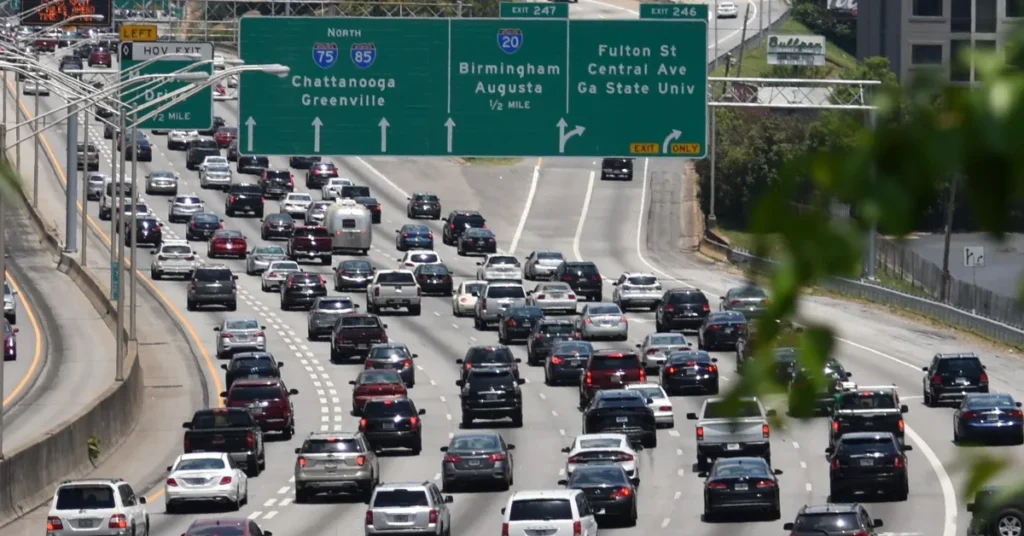
We look at every company connected to the truck and the load. Each one may carry its own insurance.
- The truck driver. Speeding, following too closely, unsafe lane changes, distraction, fatigue and impairment are common causes. Federal rules limit how long a driver may drive and work (49 C.F.R. Part 395).
- The motor carrier. The company operating the truck is usually responsible for a driver’s mistakes on the job. It may also be liable for its own negligence, such as hiring an unqualified driver, pushing unrealistic schedules or skipping maintenance.
- The freight broker. A broker that arranged the load may be liable for carelessly choosing an unsafe carrier. On May 14, 2026, the U.S. Supreme Court unanimously held that federal law does not bar these negligent selection claims (Montgomery v. Caribe Transport II, LLC, No. 24-1238). Our guide to freight broker liability in Georgia truck accidents explains how these claims work.
- The shipper or loader. Cargo that was overloaded, unbalanced or poorly secured can shift and cause a rollover or spill. The company that loaded it may share fault.
- The maintenance company. Carriers must systematically inspect, repair and maintain their trucks (49 C.F.R. § 396.3). An outside shop that did faulty brake or tire work may also be responsible.
- The manufacturer. A defective brake system, tire, coupling or underride guard may support a product liability claim against the company that made it. Our guide to truck underride crashes in Georgia explains who may be liable when a car slides under a trailer.
- Another driver. In chain-reaction crashes on the interstate, a car driver may share fault with the trucker.
If a truck crash killed someone you love, our guide to wrongful death after a truck accident in Georgia explains who can bring the claim.
If a dump truck hit you, our page on Atlanta dump truck accidents explains who may be responsible when the hauler, the contractor and the truck owner are different companies. If the driver was working in a company pickup, van or car rather than a big rig, see who pays when a company vehicle hits you in Georgia.
Hurt in a crash? Talk with Jonathan Flack.
Free consultation. No fee and no case costs unless we recover money for you.
Texts go straight to attorney Jonathan Flack and his paralegal, Vashti. Calls are answered 24/7.
Can You Sue the Trucking Company’s Insurer Directly in Georgia?

Usually not, for crashes on or after July 1, 2024. That year, Senate Bill 426 rewrote Georgia’s direct action statutes. Now you may join the motor carrier’s insurer in only two situations. Either a carrier tied to the crash is insolvent or bankrupt, or the driver or carrier cannot be served after reasonable diligence (O.C.G.A. §§ 40-1-112(c) and 40-2-140(d)(4)).
Before that change, Georgia allowed injured people to name a motor carrier’s insurer as a defendant from the start. That broader rule may still matter for older crashes. The 2025 tort reform law, Senate Bill 68, did not change these direct action sections.
How Much Insurance Do Trucking Companies Carry?
Federal law sets minimum liability coverage for trucks with a gross vehicle weight rating of 10,001 pounds or more (49 C.F.R. § 387.9):
- $750,000 for for-hire carriers hauling general, nonhazardous freight.
- $1,000,000 for oil and many other hazardous materials.
- $5,000,000 for certain high-risk hazardous materials, such as some bulk hazardous substances, explosives, toxic gases and radioactive materials.
These are minimums. Many carriers buy more, and a broker or shipper may have separate coverage. Our guide to Georgia truck insurance coverage limits explains how to find every policy.
Hours-of-Service Rules and Electronic Logging Devices

Driver fatigue is a serious safety problem in trucking. Federal hours-of-service rules limit how long property-carrying drivers may drive (49 C.F.R. Part 395):
- No more than 11 hours of driving after 10 consecutive hours off duty.
- No driving after the 14th hour since coming on duty.
- A 30-minute break after 8 cumulative hours of driving.
- No driving after 60 hours on duty in 7 days, or 70 hours in 8 days, depending on the carrier’s schedule.
- A driver may restart the 7 or 8 day period after 34 or more consecutive hours off duty.
Most drivers who must keep records of duty status must use an electronic logging device, or ELD, which records driving time automatically. Limited exceptions exist, including some short-haul drivers and vehicles manufactured before model year 2000.
ELD data often shows whether a driver went over the limits, skipped a break or falsified a log. Our guide to truck driver hours-of-service violations explains how these claims are proven.
Truck Crash Evidence That Disappears, and How to Preserve It

The most important proof in a truck case usually belongs to the trucking company. Federal rules let carriers discard much of it on a short schedule:
- ELD and hours records: kept for six months (49 C.F.R. § 395.8(k)).
- Inspection, repair and maintenance records: kept for one year where the truck is housed or maintained, and for six months after the truck leaves the carrier’s control (49 C.F.R. § 396.3(c)).
- Driver qualification file: generally kept while the driver works for the carrier and for three years after. Some items, such as medical certificates, may be removed three years after they are issued. It includes the job application, driving records, road test and medical certificate (49 C.F.R. § 391.51).
- Engine control module (ECM) data: the truck’s computer may record speed, braking and throttle before impact. It can be lost if the truck goes back into service before the data is downloaded.
- Dashcam and telematics data: many fleets use cameras and GPS tracking, and footage can be recorded over unless someone saves it.
- Dispatch and load records: messages to the driver, bills of lading, weigh tickets and the driver’s phone records.
Under Georgia law, a party must preserve evidence once it knows, or reasonably should know, that litigation is coming (Cooper Tire & Rubber Co. v. Koch, 303 Ga. 336 (2018)). A spoliation letter sent right away gives the company actual notice. If a company destroys evidence after that, the court may impose sanctions.
From his years on the insurance side, Jonathan knows that trucking companies often send investigators to a serious crash quickly. Our guide to trucking company evidence after a crash lists what to request.
Where Atlanta Truck Crashes Happen: I-285, Spaghetti Junction, I-75, I-85 and I-20
Metro Atlanta has some of the most congested truck corridors in the country. The American Transportation Research Institute’s 2026 list of the top 100 truck bottlenecks includes nine Georgia locations, all in the Atlanta area:
- No. 3: I-285 at I-85 North, the DeKalb County interchange known as Spaghetti Junction.
- No. 5: I-75 at I-285 North.
- No. 6: I-20 at I-285 West.
- No. 10: I-75 in McDonough.
- No. 15: I-20 at I-285 East.
- No. 22: I-285 at GA 400.
- No. 50: I-20 at I-75/I-85, where I-20 crosses the Downtown Connector.
- No. 74: I-75 at I-675.
- No. 87: I-75 at I-85.
A bottleneck ranking measures truck congestion, not crashes. But heavy truck traffic means constant merging, sudden slowdowns and lane changes next to vehicles that need more room to stop. Our guide to I-285 and I-85 truck accidents in Atlanta covers the crash patterns at these interchanges.
Deadlines and the 2025 Tort Reform Changes in Georgia Truck Cases
Most truck injury lawsuits must be filed within two years of the crash (O.C.G.A. § 9-3-33). Evidence deadlines are much shorter, as shown above, so waiting even a few weeks can cost proof.
Georgia’s tort reform law, Senate Bill 68, was signed on April 21, 2025. Four changes matter most in truck cases:
- Seat belt evidence. A jury may now hear that an injured person was not wearing a seat belt, on issues including negligence, causation and apportionment of fault (O.C.G.A. § 40-8-76.1(d)). Wearing a seat belt, and documenting it, matters more than before.
- Arguing pain and suffering amounts. A lawyer may suggest a dollar figure for noneconomic damages only after the evidence closes, in closing argument, and the figure must be rationally related to the evidence (O.C.G.A. § 9-10-184). Suggesting a large number to the jury is often called anchoring.
- Medical bills. For claims arising on or after April 21, 2025, juries may see what health insurance actually paid, not just the amount billed. Recovery is limited to the reasonable value of medically necessary care, and letter of protection arrangements are open to discovery (O.C.G.A. § 51-12-1.1). Defense lawyers call the gap between billed and paid amounts phantom damages.
- Separate trial phases. Any party may ask to have the jury decide fault first and damages afterward (O.C.G.A. § 51-12-15). That means the liability proof has to stand on its own.
These changes make early evidence and careful medical records more important. They do not change the two-year filing deadline.
Wondering what your case is worth? Our guide to what a truck accident case is worth in Georgia explains what sets the value, from the injuries and fault to the insurance behind the truck.
If the crash caused a head injury, our guide to what a brain injury from a truck crash is worth in Georgia explains which records and tests usually matter most.
Georgia Truck Crash Guides
Jonathan Flack wrote these guides to answer the questions that come up most in Georgia truck cases.
- Georgia truck accident claims: laws, deadlines and insurance
- What a truck accident case is worth in Georgia
- How much insurance trucking companies carry
- Suing the freight broker after a truck crash
- Hours-of-service violations
- Evidence the trucking company has after a crash
- Underride crashes
- Who is at fault in a jackknife crash
- Brain injury claims after a truck crash
- Wrongful death after a truck crash
- Dump truck crashes in Atlanta
- Truck crashes on I-285 and I-85
- Norcross truck accident lawyer
- What to do after being hit by a semi
- How to choose a truck accident lawyer
Atlanta Truck Accident Questions
Who is liable for a truck accident in Georgia?
Usually the truck driver and the motor carrier that operates the truck. A freight broker, shipper, maintenance shop or manufacturer may share responsibility, depending on what caused the crash.
Can I sue the trucking company’s insurance company directly in Georgia?
Only in limited cases for crashes on or after July 1, 2024. The insurer may be joined if the carrier is insolvent or bankrupt, or if the driver or carrier cannot be served after reasonable diligence (O.C.G.A. § 40-1-112(c)).
How much insurance does a semi-truck have to carry?
At least $750,000 for interstate for-hire carriers hauling general freight, and $1,000,000 to $5,000,000 for many hazardous loads (49 C.F.R. § 387.9). Many carriers carry more.
How long do I have to file a truck accident claim in Georgia?
Most injury lawsuits must be filed within two years of the crash (O.C.G.A. § 9-3-33). Act much sooner to protect evidence, because some trucking records can be discarded after six months.
Can I still recover if I was partly at fault?
Yes, if you were less than 50% at fault. Your recovery is reduced by your percentage of fault (O.C.G.A. § 51-12-33).
Can a freight broker be sued for a truck accident?
Yes, in some cases. In May 2026 the U.S. Supreme Court held that federal law does not preempt state negligence claims against a broker for carelessly choosing an unsafe carrier (Montgomery v. Caribe Transport II, LLC).
What should I do after being hit by a semi in Atlanta?
Get medical care, photograph the truck’s company name and DOT number, and do not give a recorded statement to the trucking company’s insurer. Our guide on what to do after being hit by a semi in Georgia walks through each step.
Talk With an Atlanta Truck Accident Attorney
Jonathan Flack spent two and a half years on the insurance side of truck and tractor-trailer cases. He knows what carriers look for in the first days after a crash, and he now uses that knowledge for injured people. He files suit and goes to court when an insurer will not pay fairly.
If your crash happened outside Atlanta, see our Georgia truck accident attorney page.
Call Flack Injury Law at (678) 653-0309 or reach out online for a free consultation. You can speak directly with Jonathan Flack. You owe no fee and no case costs unless we recover money for you.
Contact Us
1201 W Peachtree St NW, Ste 2300
Atlanta, GA 30309
“I contacted Jonathan, who immediately responded and visited with us the next day.” Leonard Freedman, client’s husband

Do not let insurance companies control the outcome of your injury claim. Call Flack Injury Law today at (678) 653-0309 or contact us through our secure online form to schedule your free case review. The sooner you reach out, the sooner we can begin protecting your rights and fighting for the compensation you deserve.