

Atlanta Dump Truck Accident Lawyer
After a dump truck crash in Georgia, the driver and the company operating the truck are usually responsible, and a quarry, contractor, owner-operator or repair shop may share the blame. Georgia requires loads to be secured or covered so they cannot drop, escape or shift onto the road (O.C.G.A. §§ 40-6-248.1 and 40-6-254), and gross weight is generally limited to 80,000 pounds on state highways and interstates (O.C.G.A. § 32-6-26). Most injury lawsuits must be filed within two years of the crash (O.C.G.A. § 9-3-33).
Before founding Flack Injury Law, attorney Jonathan Flack spent two and a half years on the insurance side of commercial truck and tractor-trailer cases. He now represents injured people only. Call (678) 653-0309 for a free consultation. You owe no fee and no case costs unless we recover money for you.
in this section
Page contents
Dump Truck Accident Lawyer in Atlanta: Who Is Responsible?
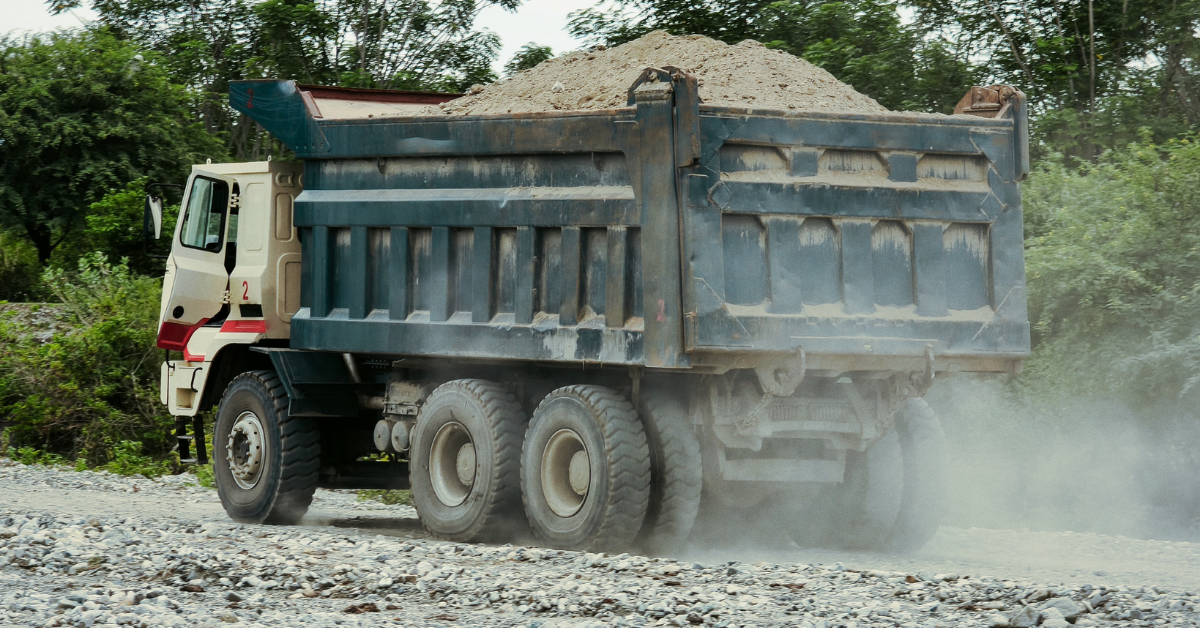
A dump truck crash is a truck case, not an ordinary car wreck. The truck may be owned by one company, driven for another and loaded at a quarry run by a third. Each may have safety duties and its own insurance.
You can still recover if you were partly at fault, as long as you were less than 50% responsible. Your award is reduced by your share of fault (O.C.G.A. § 51-12-33). For tractor-trailers and other large trucks, see our Atlanta truck accident attorney page. Our guide to truck underride crashes in Georgia explains who may be liable when a car slides under a trailer.
Our truck results include $650,000: Tractor-Trailer Head-On Collision in Peachtree City, and $100,000: Trucking Crash on I-20 Near Augusta. Prior results do not guarantee a similar outcome.
Written by attorney Jonathan Flack. Before founding Flack Injury Law, Jonathan spent two and a half years on the insurance side of commercial truck, tractor-trailer and medical transport van cases. Super Lawyers Rising Star (2024 to 2027). The National Trial Lawyers Top 40 Under 40, Civil Plaintiff (2026). GTLA member. Last reviewed: November 1, 2026.
Why Do Dump Truck Accidents Happen?
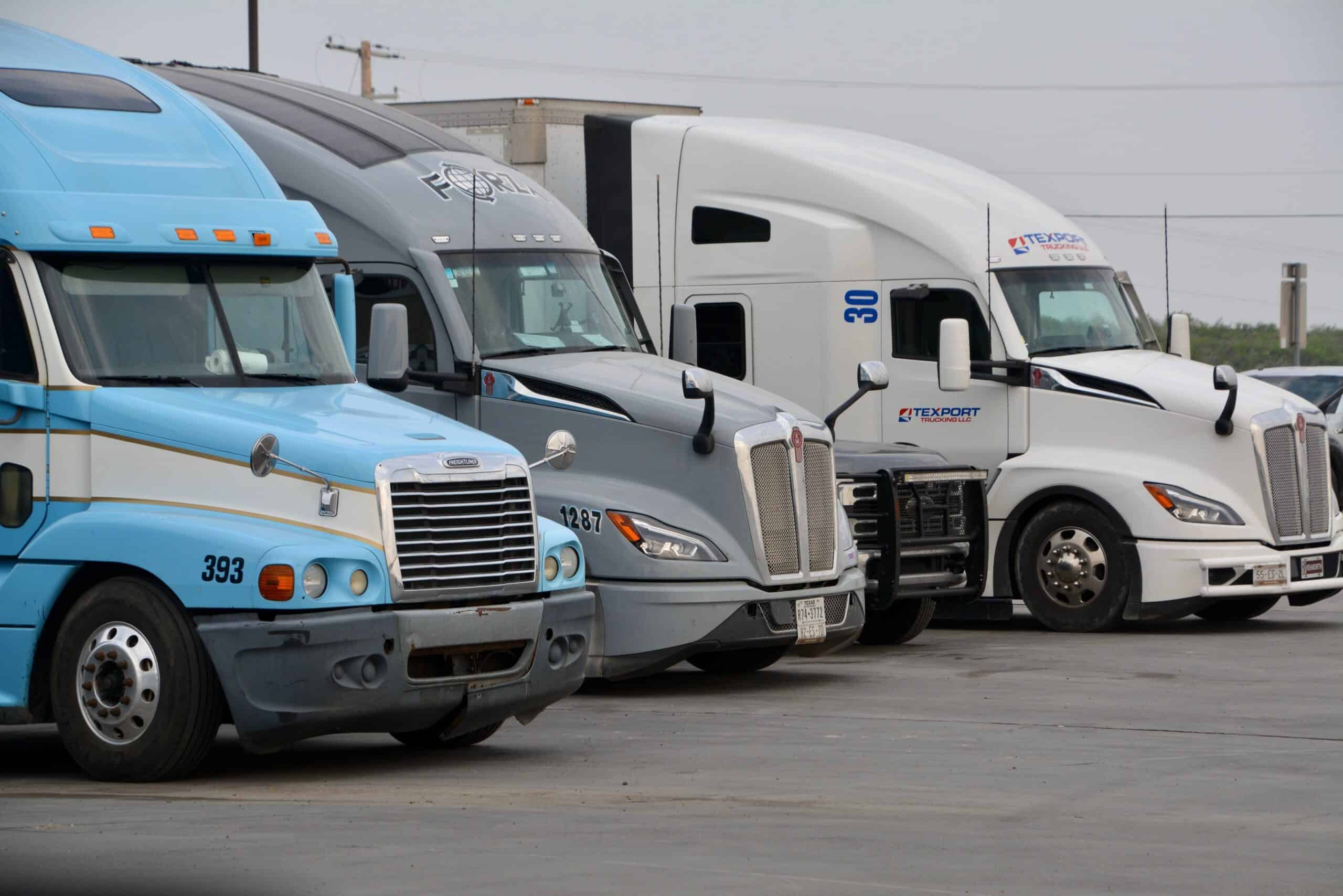
Dump trucks make short, repeated trips with heavy loads between quarries, plants and job sites. We look first for these problems:
- Overloading. Extra weight strains brakes, tires and axles and may lengthen stopping distance.
- Spilled loads. Gravel, dirt and asphalt can fall or blow into traffic and windshields. Federal rules require cargo to be kept from leaking, spilling, blowing or falling (49 C.F.R. § 393.100(b)).
- Shifting loads and rollovers. Cargo must be secured so it does not shift in a way that affects stability or steering (49 C.F.R. § 393.100(c)).
- Brake and maintenance failures. Carriers must systematically inspect, repair and maintain their trucks (49 C.F.R. § 396.3).
- Wide turns and blind spots. The FMCSA warns that a truck may swing left before a right turn. If you cannot see the driver’s face in the mirror, the driver cannot see you.
- Stopping distance. Large trucks may need up to two football fields to stop safely, according to the FMCSA.
- Work zones. Dump trucks slow, turn and back up at job site entrances next to moving traffic.
The American Transportation Research Institute’s 2026 list ranks I-285 at I-85 North as the nation’s third worst truck bottleneck, a congestion measure, not a crash count. See our guide to I-285 and I-85 truck accidents in Atlanta.
Hurt in a crash? Talk with Jonathan Flack.
Free consultation. No fee and no case costs unless we recover money for you.
Texts go straight to attorney Jonathan Flack and his paralegal, Vashti. Calls are answered 24/7.
Georgia Load and Weight Rules for Dump Trucks
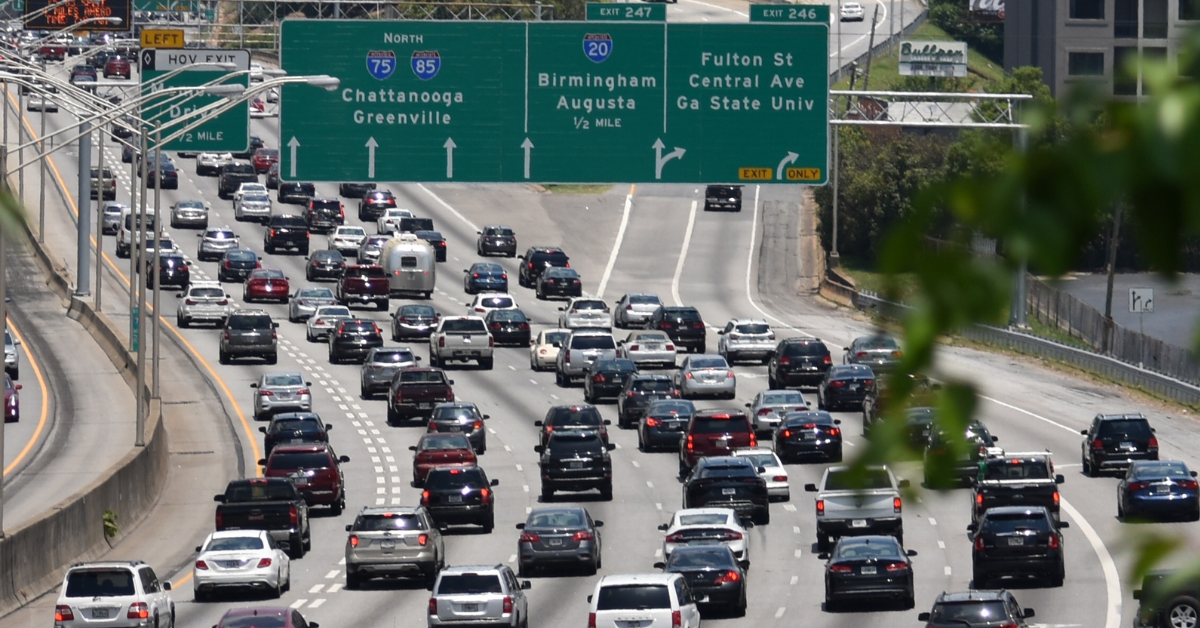
A vehicle on a Georgia public road must be built, loaded or covered so its load cannot drop, escape or shift and create a hazard or leave litter. The load and any cover must be fastened down. A motor carrier may not let anyone drive a commercial vehicle with an unsecured load (O.C.G.A. § 40-6-248.1). The law allows material to be spread during road maintenance or construction.
Driving with a load not adequately secured to keep it from dropping or shifting onto the roadway is also a misdemeanor (O.C.G.A. § 40-6-254).
How Much Can a Dump Truck Weigh in Georgia?
Limits depend on the road and the cargo (O.C.G.A. § 32-6-26):
- State highways and interstates: generally 80,000 pounds gross. On interstates, a tandem axle is generally limited to 34,000 pounds.
- County roads: 56,000 pounds, unless the truck is making a pickup or delivery on that road or the road is a designated truck route.
- Construction aggregates: off the interstates, up to 23,000 pounds per single axle and 46,000 per tandem axle, within 80,000 pounds gross. A 5% variance applies within 100 miles of the point of origin.
Heavier loads need a special permit (O.C.G.A. § 32-6-28). An overweight scale ticket can show a weight violation and may help explain why a truck could not stop or stay upright.
Which Safety Rules Apply to Dump Truck Drivers?
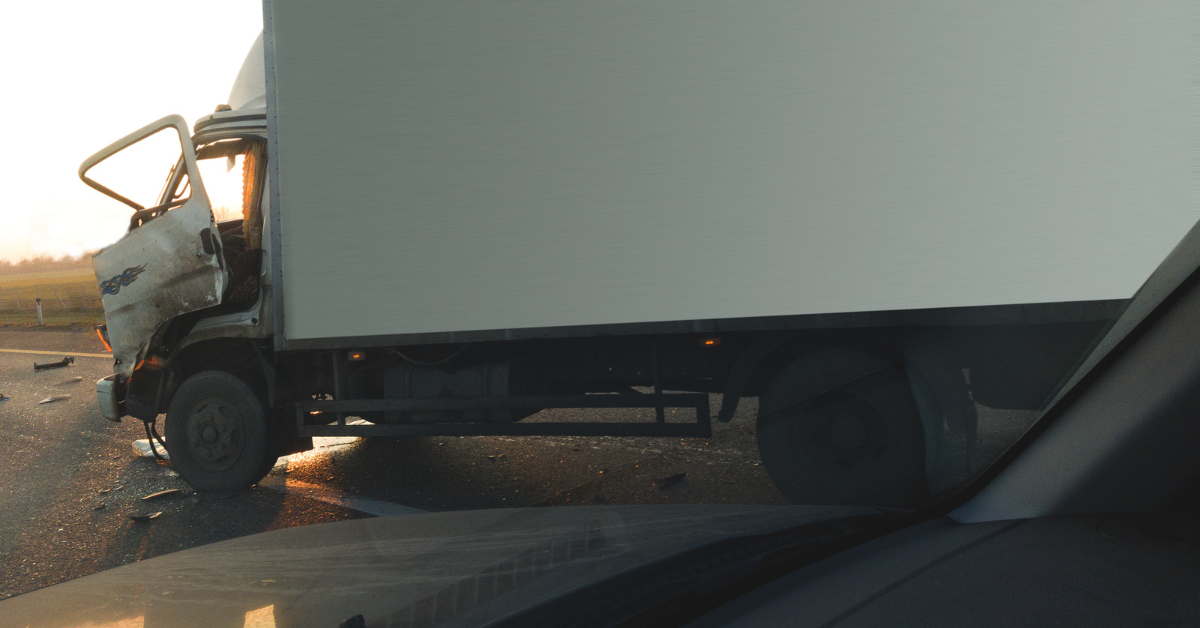
The federal motor carrier safety regulations apply to commercial motor vehicles in interstate commerce, including trucks rated or weighing 10,001 pounds or more (49 C.F.R. § 390.5). Many dump trucks never leave Georgia, but state law applies most of the same rules.
Georgia requires commercial vehicles to meet federal equipment and maintenance standards, and drivers to follow federal qualification, driving and hours rules (O.C.G.A. § 40-1-8). The Department of Public Safety has adopted 49 C.F.R. Parts 382, 383 and 390 through 397 for intrastate carriers (Ga. Comp. R. & Regs. 570-38-1-.05). One difference: intrastate drivers may be 18, while interstate drivers must be 21.
- Commercial driver’s license. A CDL is required to drive a single vehicle rated at 26,001 pounds or more (49 C.F.R. Part 383).
- Drug and alcohol testing. CDL drivers face pre-employment, random and post-accident testing (49 C.F.R. Part 382). Testing is required after a fatal crash, and after an injury or tow-away crash if the driver is cited (49 C.F.R. § 382.303).
- Hours of service. A driver may drive no more than 11 hours after 10 hours off, and not after the 14th hour on duty (49 C.F.R. Part 395).
- Short-haul exception. A driver who stays within 150 air miles of the reporting location and is released within 14 hours needs no logbook or electronic logging device. The carrier must keep time records for six months instead (49 C.F.R. § 395.1(e)(1)). Otherwise, the driver generally must keep a log for that day.
- Construction restart. A driver who mainly hauls construction materials to or from nearby active sites may restart weekly hours after 24 hours off, not 34 (49 C.F.R. §§ 395.1(m) and 395.2).
Our guide to federal motor carrier safety regulations in Georgia truck cases explains how these rules prove fault.
Who May Be Liable for a Dump Truck Accident in Georgia?
We look at everyone connected to the truck, the load and the job:
- The driver, for speeding, following too closely, unsafe turns, distraction, fatigue or impairment.
- The hauling company. An employer is liable for an employee’s negligence within the scope of its business (O.C.G.A. § 51-2-2). It may also be liable for careless hiring, or for keeping a driver after learning the driver was unfit (O.C.G.A. § 34-7-20).
- An owner-operator. A driver who owns the truck may be liable directly. If the truck was leased to a carrier, the lease must give the carrier exclusive control of the truck and full responsibility for its operation (49 C.F.R. § 376.12(c)(1)).
- An owner who lent the truck, if the owner knew the driver was incompetent or habitually reckless (Hicks v. Heard, 297 Ga. App. 689 (2009)).
- The contractor running the job. A company is generally not liable for an independent hauler’s negligence (O.C.G.A. § 51-2-4). Exceptions include keeping the right to control the time and manner of the work, or breaking a statutory duty (O.C.G.A. § 51-2-5).
- The quarry, plant or loader, if it overloaded the truck or loaded it unevenly.
- A repair shop that did faulty brake, tire or steering work.
Georgia divides damages among everyone at fault by percentage (O.C.G.A. § 51-12-33), so finding every responsible company matters.
How Much Insurance Do Dump Truck Companies Carry?
It depends on what the truck hauls and for whom:
- Interstate for-hire carriers hauling nonhazardous property in trucks rated at 10,001 pounds or more must carry at least $750,000 (49 C.F.R. § 387.9). There is no separate category for sand, gravel or construction materials.
- Georgia intrastate carriers that need a state certificate must carry at least $100,000 per person, $300,000 per accident and $50,000 for property damage. Another state rule may set a different amount (Ga. Comp. R. & Regs. 570-38-2-.05).
- Private carriers. The federal minimums cover for-hire carriers, not a company hauling its own nonhazardous materials (49 C.F.R. § 387.3). A builder hauling its own materials might carry just Georgia’s basic auto liability minimum (O.C.G.A. § 33-34-4).
Many companies carry more, and a contractor’s or loader’s policy may also apply. See our guide to Georgia truck insurance coverage limits.
Can You Sue the Insurer Directly?
Usually not, for crashes on or after July 1, 2024. Senate Bill 426 allows joining a motor carrier’s insurer only if a related carrier is insolvent or bankrupt. It is also allowed if the driver or carrier cannot be served after reasonable diligence (O.C.G.A. §§ 40-1-112(c) and 40-2-140(d)(4)).
Evidence to Preserve After a Dump Truck Crash
Most of the proof belongs to the companies, and some can be discarded within months:
- Load and scale tickets, showing what the truck carried, where it was loaded and what it weighed.
- Duty records. Logs and electronic logging device data, and short-haul time records, are kept for six months (49 C.F.R. §§ 395.8(k) and 395.1(e)(1)).
- Maintenance records, kept for one year, and six months after the truck leaves the carrier (49 C.F.R. § 396.3(c)).
- The driver qualification file, with the application, driving record and medical certificate (49 C.F.R. § 391.51).
- Post-accident drug and alcohol test results.
- Telematics, GPS, dash camera and engine data, which can be recorded over or lost.
- Your photos of the company name, DOT number, plate, spilled material and your injuries.
A party must preserve evidence once it knows, or reasonably should know, that litigation is coming (Cooper Tire & Rubber Co. v. Koch, Ga. 2018). A preservation letter gives each company notice. See our guide to trucking company evidence after a crash.
Deadlines and 2025 Tort Reform Changes
Most injury lawsuits must be filed within two years of the crash (O.C.G.A. § 9-3-33). If a government dump truck hit you, written notice is due sooner: six months for a city and 12 months for a county or the state (O.C.G.A. §§ 36-33-5, 36-11-1 and 50-21-26).
Georgia’s tort reform laws, Senate Bills 68 and 69, were signed on April 21, 2025. Key changes:
- Seat belts. In lawsuits filed on or after April 21, 2025, a jury may consider seat belt nonuse on negligence, causation and fault, and it may reduce your damages, subject to the judge’s evidence rulings (O.C.G.A. § 40-8-76.1(d)).
- Medical bills. For crashes on or after April 21, 2025, damages are limited to the reasonable value of medically necessary care, and juries may see what your health plan would pay, not just what was billed. Letters of protection are open to discovery (O.C.G.A. § 51-12-1.1).
- Pain and suffering. A lawyer may suggest a dollar figure for pain and suffering only after the close of evidence, and it must be rationally related to the evidence (O.C.G.A. § 9-10-184).
- Split trials. Any party may elect, in writing before the pretrial order, to have the jury decide fault first and damages afterward, with limited exceptions (O.C.G.A. § 51-12-15).
Our guide to SB 68 and Georgia injury claims explains each change.
Atlanta Dump Truck Accident Questions
Usually the driver and the company operating the truck, because Georgia requires loads to be secured or covered (O.C.G.A. § 40-6-248.1). Note the company name, DOT number and plate, since the driver may not know anything hit you.
Yes, for commercial motor vehicles in interstate commerce, which include trucks of 10,001 pounds or more (49 C.F.R. § 390.5). Georgia applies most of the same rules to trucks that stay in the state (O.C.G.A. § 40-1-8).
At least $750,000 for interstate for-hire carriers of nonhazardous property (49 C.F.R. § 387.9). Other dump trucks may carry much less.
Yes, if the extra weight helped cause the crash. Breaking Georgia’s weight limits (O.C.G.A. § 32-6-26) can be evidence of negligence, and the loader may share fault.
Usually two years from the crash (O.C.G.A. § 9-3-33). Act sooner, because some trucking records may be discarded after six months.
Talk With an Atlanta Dump Truck Accident Attorney

Jonathan Flack spent two and a half years on the insurance side of commercial truck cases. He knows what carriers look for after a crash, and he now uses that knowledge for injured people. He files suit and goes to court when an insurer will not pay fairly. Learn more about attorney Jonathan Flack.
If your crash happened outside Atlanta, see our Georgia truck accident attorney page. If a truck crash killed someone you love, read about wrongful death after a truck accident in Georgia.
Call Flack Injury Law at (678) 653-0309 or reach out online for a free consultation. You can speak directly with Jonathan Flack. You owe no fee and no case costs unless we recover money for you.
Contact Us
1201 W Peachtree St NW, Ste 2300
Atlanta, GA 30309
“I contacted Jonathan, who immediately responded and visited with us the next day.” Leonard Freedman, client’s husband

Do not let insurance companies control the outcome of your injury claim. Call Flack Injury Law today at (678) 653-0309 or contact us through our secure online form to schedule your free case review. The sooner you reach out, the sooner we can begin protecting your rights and fighting for the compensation you deserve.