
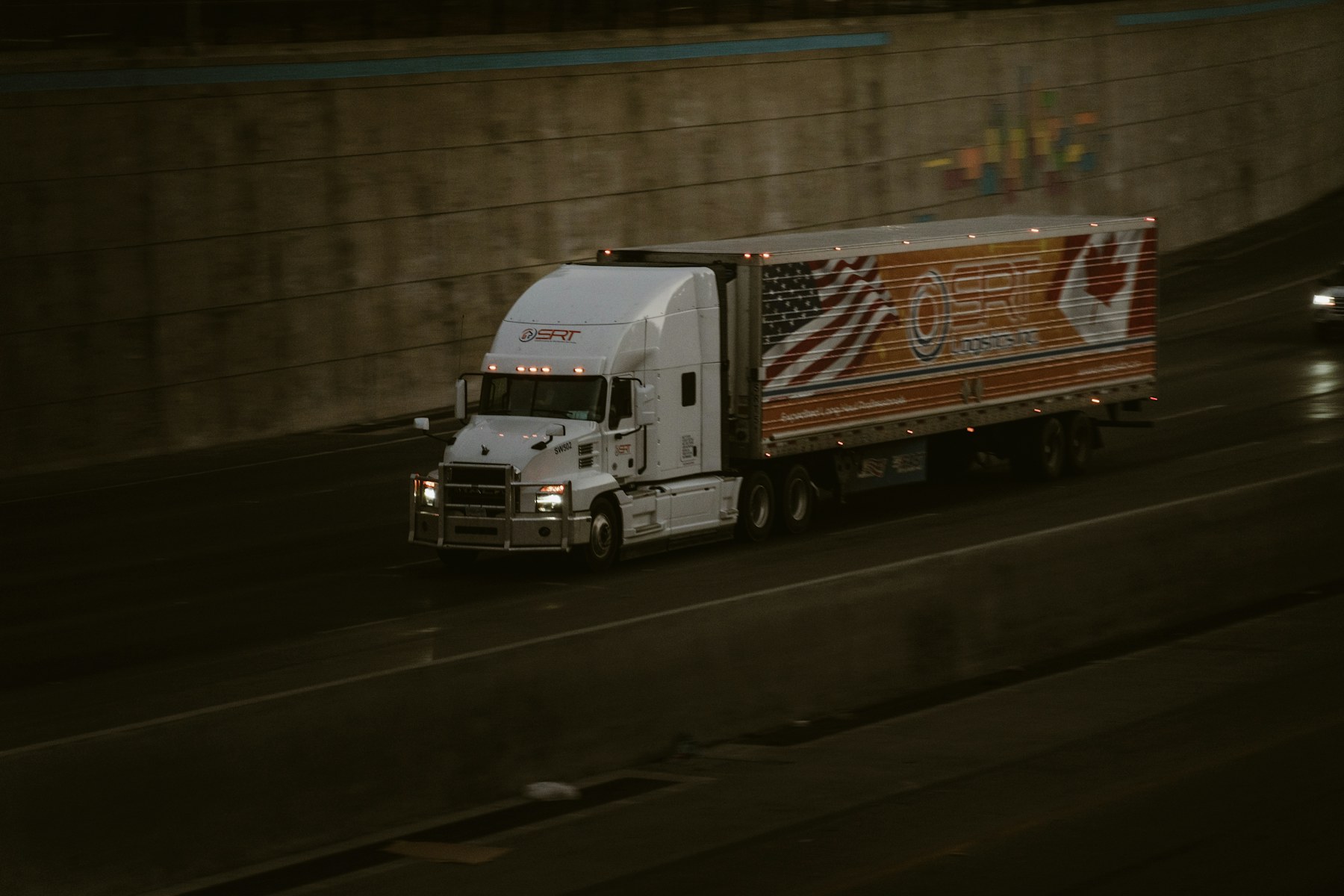
When a car slides under the back or side of a tractor-trailer in Georgia, more than one party may share the blame. That can include the truck driver, the trucking company, the trailer’s owner or lessor, a repair shop or the guard’s manufacturer. Federal rules require a rear impact guard on most trailers rated 10,000 pounds or more and built on or after January 26, 1998. The guard must meet federal strength standards and sit no more than 22 inches off the ground (49 C.F.R. § 393.86). No federal rule requires side underride guards.
Most injury lawsuits must be filed within two years of the crash (O.C.G.A. § 9-3-33), and some truck records can be discarded within months.
Who We Help
Flack Injury Law represents people in Georgia who were hurt in a crash someone else caused, including car, truck, rideshare, delivery vehicle, medical transport van, motorcycle, bicycle and pedestrian crashes, and families after a fatal crash.
We do not defend people who are being sued, and we do not handle property-damage-only, slip and fall or workplace claims. If no one was hurt and your dispute is with your own insurance company over damage to your car, that is not the kind of case we handle. If you were hurt and have an offer or release in front of you, get a free release review before you sign.
Who Is Responsible When a Car Goes Under a Tractor-Trailer in Georgia?
An underride crash happens when a smaller vehicle slides beneath a trailer. The trailer bed often strikes the windshield and roof, above the parts of the car built to absorb a crash.
Responsibility depends on why the crash happened and why the car went under. A truck may have stopped in a travel lane without warning devices, or its guard may have been missing, bent or rusted through.
Insurers often argue that the driver who hit the back of a truck is at fault. Georgia reduces your recovery by your share of fault and bars it at 50% or more (O.C.G.A. § 51-12-33). The truck’s lighting, reflective tape, warning triangles and guard condition can change that picture.
Written by attorney Jonathan Flack. Before founding Flack Injury Law, Jonathan spent two and a half years on the insurance side of commercial truck, tractor-trailer and medical transport van cases. Super Lawyers Rising Star (2024 to 2027). The National Trial Lawyers Top 40 Under 40, Civil Plaintiff (2026). GTLA member. Last reviewed: November 3, 2026.
How Common Are Underride Crashes?
- In 2024, 20% of passenger vehicle occupants killed in two-vehicle crashes with large trucks died when the front of their vehicle struck the rear of the truck (IIHS).
- A 2010 IIHS analysis of a small sample of fatal crashes into the rear of large trucks found that 82% involved underride.
- NHTSA estimates about 89 occupants of light passenger vehicles die each year in two-vehicle side underride crashes with tractor-trailers, after adjusting for underreporting.
Do Trucking Companies Have to Have Underride Guards?
Yes, on the rear of most trailers. Under 49 C.F.R. § 393.86(a), a trailer or semitrailer with a gross vehicle weight rating of 10,000 pounds or more, built on or after January 26, 1998, must have a rear impact guard. The guard must meet Federal Motor Vehicle Safety Standard (FMVSS) 223 as it stood when the trailer was built, and the trailer must meet FMVSS 224 (49 C.F.R. §§ 571.223 and 571.224).
The guard must also fit the trailer:
- Its bottom edge may be no more than 22 inches above the ground at any point across its width.
- It must reach to within 4 inches of each side of the trailer.
- At any height of 22 inches or more above the ground, its rear surface must be within 12 inches of the back of the trailer.
The 2022 upgrade
In July 2022, NHTSA upgraded FMVSS 223 and 224 under the Bipartisan Infrastructure Law. The rule took effect January 11, 2023, with a compliance date of July 15, 2024. Guards must now protect occupants of compact and subcompact cars that hit the rear of a trailer at 35 mph, squarely or with half the car’s front overlapping.
NHTSA declined to require protection in 30% overlap crashes, where only the corner of the car hits the trailer, and in July 2024 denied petitions asking for that test.
Older trailers and exceptions
Trailers built before January 26, 1998, and other trucks with a high rear end, follow an older rule: if the rear is more than 30 inches high when empty, the guard may be no more than 30 inches off the ground (49 C.F.R. § 393.86(b)). Truck tractors, pole trailers, pulpwood trailers and a few other vehicle types are excepted.
Hurt in a crash? Talk with Jonathan Flack.
Free consultation. No fee and no case costs unless we recover money for you.
Texts go straight to attorney Jonathan Flack and his paralegal, Vashti. Calls are answered 24/7.
Are Side Underride Guards Required in Georgia?
No. As of November 2026, no federal rule requires side underride guards on trailers, and we found no Georgia rule that does.
NHTSA published an advance notice of proposed rulemaking on side guards in April 2023. Its June 2024 report to Congress estimated that guards on every trailer would save about 17.2 lives a year in crashes up to 40 mph. It also found the costs outweighed the benefits. NHTSA said it would wait for recommendations from the Advisory Committee on Underride Protection before deciding whether to develop side guard requirements. We found no proposed federal side guard rule as of November 2026. The Stop Underrides Act 2.0, introduced in Congress on February 4, 2026, would direct NHTSA to require side guards. It had not become law when this post was reviewed.
Without a mandate, a side underride claim usually turns on how the crash happened, such as an unsafe turn across traffic, a truck blocking the road at night, or missing reflective tape or lights.
What Other Safety Rules Matter in Underride Crashes?
- Inspection and maintenance. Motor carriers must systematically inspect, repair and maintain their vehicles, and keep parts in safe and proper operating condition at all times (49 C.F.R. § 396.3). Each trailer must pass an inspection at least once every 12 months (49 C.F.R. § 396.17). Since December 9, 2021, that annual inspection includes the rear impact guard.
- Driver reports. Drivers must report defects, including in lighting devices and reflectors, and carriers must repair safety defects before the vehicle runs again (49 C.F.R. § 396.11).
- Reflective tape. Trailers 80 inches or wider with a weight rating over 10,000 pounds, built on or after December 1, 1993, must carry retroreflective sheeting or reflectors that meet FMVSS 108 (49 C.F.R. § 393.11). Most older trailers of that size needed retrofits by June 1, 2001 (49 C.F.R. § 393.13).
- Stopped trucks. A driver stopped on a road or shoulder must turn on hazard flashers immediately and, within 10 minutes, place three warning devices. Usually they go at about 10 feet, 100 feet behind and 100 feet ahead; on a divided highway, all three go behind, out to about 200 feet (49 C.F.R. § 392.22).
Our guide to federal trucking safety rules in Georgia covers the rest.
Who Can Be Liable for an Underride Crash?
- The truck driver, for unsafe stops, turns, lane changes or a failure to use flashers and triangles.
- The trucking company, for its driver’s conduct on the job and its own failures, such as a damaged guard left in service.
- The trailer owner or lessor. Federal law generally shields a company in the business of renting or leasing vehicles from liability based only on ownership. It does not shield the company from its own negligence or criminal wrongdoing (49 U.S.C. § 30106).
- A repair or maintenance shop, if it repaired a guard, lights or reflective tape poorly or missed a defect.
- The trailer or guard manufacturer, if a defect caused the guard to fail. Georgia generally bars suits against a manufacturer filed more than 10 years after the product’s first sale for use or consumption (O.C.G.A. § 51-1-11).
- A freight broker or shipper, in some cases. See freight broker liability.
A Georgia jury considers the fault of everyone who contributed to the crash, including those not named in the lawsuit (O.C.G.A. § 51-12-33).
What Evidence Should Be Preserved After an Underride Crash?
The trailer is the key evidence, and it may be repaired, sold or scrapped. Ask in writing that the carrier preserve:
- The trailer, the guard and any broken pieces, unrepaired.
- The trailer’s VIN and build date, which decide which guard rule applies.
- Maintenance, inspection and repair records. Carriers must keep them for one year, and for six months after a vehicle leaves their control (49 C.F.R. § 396.3).
- Driver vehicle inspection reports, which carriers must keep for only three months (49 C.F.R. § 396.11).
- Electronic control module data, dash camera video and the driver’s logs.
Photograph the guard, lights and reflective tape before anyone moves the trailer. Our guide to trucking company evidence after a crash explains how to send a preservation letter.
Insurance, Wrongful Death and the Two-Year Deadline
A for-hire interstate carrier hauling general freight in a vehicle rated 10,001 pounds or more must carry at least $750,000 in liability coverage. Oil and many hazardous materials require $1,000,000 or more (49 C.F.R. § 387.9). See Georgia truck insurance coverage limits.
Underride crashes are often fatal. In Georgia, a surviving spouse, or the children if there is no spouse, may recover the full value of the life of the person who died (O.C.G.A. § 51-4-2). If there is no spouse or child, the parents or the estate may bring the claim (O.C.G.A. §§ 19-7-1 and 51-4-5). Read more about wrongful death after a truck accident.
Most injury lawsuits must be filed within two years of the crash (O.C.G.A. § 9-3-33).
Why Flack Injury Law for a Truck Underride Case
Jonathan Flack spent two and a half years on the insurance side of commercial truck and tractor-trailer cases, so he has seen how carriers and their insurers defend these claims. We represent injured people only.
Jonathan keeps a limited caseload, works directly on every case and files suit when needed. From our case results: “Our client was hurt in a head-on collision with a tractor-trailer in Peachtree City, Georgia. Flack Injury Law recovered $650,000 for the client.” Prior results do not guarantee a similar outcome. See our case results and Atlanta truck accident attorney page.
Calls are answered 24/7 at (678) 653-0309, and the consultation is free. You can speak directly with Jonathan Flack. You owe no fee and no case costs unless we recover money for you.
Truck Underride Crash Questions
Rear guards are required on most trailers rated 10,000 pounds or more and built since January 26, 1998 (49 C.F.R. § 393.86). Side guards are not federally required.
You may be able to. A missing or broken guard on a trailer that needed one may support a claim against the carrier and others.
Not automatically you. A truck stopped without flashers or triangles, with dark lights or missing reflective tape, may share fault, and Georgia lets you recover if you were less than 50% at fault (O.C.G.A. § 51-12-33).
Maintenance records for one year, and six months after a vehicle leaves the carrier’s control. Driver inspection reports for three months (49 C.F.R. §§ 396.3 and 396.11).
Generally two years from the crash (O.C.G.A. § 9-3-33).

Get a Free Case Review From Jonathan Flack
Tell us what happened. Jonathan represents injured people only, and he works directly on every case. You pay no fee and no case costs unless we recover money for you.
Texts go straight to attorney Jonathan Flack and his paralegal, Vashti. Calls are answered 24/7.
“I contacted Jonathan, who immediately responded and visited with us the next day.” Leonard Freedman, client’s husband
Read our Google reviews · See case results
Related Guides
- What Evidence Does a Trucking Company Have to Keep After a Crash?
- How Much Insurance Do Trucking Companies Carry in Georgia?
- Wrongful Death After a Truck Accident in Georgia: Who Can File and What It Pays
- Truck and Tractor-Trailer Accidents in Georgia: How Federal Motor Carrier Safety Regulations Can Make or Break Your Case
See all our guides for people hurt in Georgia crashes.
This article is general information about Georgia law, not legal advice for any specific situation. Laws change and outcomes depend on facts particular to each case. Reading this page or contacting Flack Injury Law through this website does not create an attorney-client relationship. Do not send confidential information until an attorney-client relationship has been established.