
Georgia Medical Transportation (NEMT) Accident Claims: Laws, Insurance & Deadlines
A Georgia medical transportation accident claim arises when someone is hurt on a non-emergency medical transportation (NEMT) ride, such as a Medicaid van to dialysis or a doctor visit. A state-contracted broker books those rides. Transportation providers under contract with the broker, usually local van companies, drive them.
The claim usually runs against the transportation company and its driver, and sometimes the broker. Many injuries happen without a crash, when a driver fails to secure a wheelchair or brakes hard. This guide explains how these claims work anywhere in Georgia.
Why NEMT Accident Claims Work Differently in Georgia
NEMT carries people to dialysis, therapy, doctor visits and other Medicaid-covered care. Many passengers are older, use wheelchairs or have health conditions that make an injury more serious and harder to recover from.
A single ride can involve several parties: the Georgia Department of Community Health (DCH), the broker that books the ride, the local company that owns the van, its driver, and sometimes another motorist. Georgia’s insurance rules for these vans also differ from the rules for trucks and buses. Knowing who did what is most of the work.
in this section
Page contents
How Georgia’s NEMT System Works

DCH does not drive anyone. It contracts with a broker that recruits and contracts with local transportation providers, and it pays the broker a monthly rate for each eligible Medicaid member.
The Broker: Verida, Statewide Since April 2026
DCH divides Georgia into five NEMT regions: North, Atlanta, Central, East and Southwest. Since April 1, 2026, Verida (formerly Southeastrans) has been the Medicaid transportation broker for all five. Before that date, Modivcare (formerly LogistiCare) served the Central, East and Southwest regions, so the broker on an older trip may be different.
The Transportation Company and Its Driver
The broker assigns each trip to a contracted transportation provider, usually a local company that operates the van and its driver. That provider and its driver are usually the first parties responsible when something goes wrong on a ride.
Who Qualifies for Rides
NEMT is for Medicaid members who have no other way to get to a Medicaid-covered service. Members generally must book rides at least three business days ahead. PeachCare for Kids members are not eligible for NEMT.
Who Can Be Responsible

Responsibility follows the conduct that caused the injury. In most cases that points to the transportation company and its driver, but the broker and other drivers can also be involved.
The Transportation Company and Its Driver
Georgia law requires a carrier of passengers to use extraordinary diligence to protect them (O.C.G.A. § 46-9-132), which Georgia defines as the extreme care that very prudent and thoughtful people use (O.C.G.A. § 51-1-3). The Court of Appeals has held that an ambulance is a common carrier (Bricks v. Metro Ambulance Service, 1985), but no Georgia appellate decision we have found settles whether a Medicaid transport van is one, so expect that question to be argued. Either way, DCH’s NEMT Policy Manual sets concrete duties, such as confirming that wheelchairs and passengers are secured before the van moves.
The Medicaid Broker
A company that hires an independent contractor is generally not liable for the contractor’s negligence in Georgia (O.C.G.A. § 51-2-4), but there are exceptions, including when it keeps the right to control the time and manner of the work (O.C.G.A. § 51-2-5). In January 2025, the Court of Appeals reversed summary judgment for a Medicaid broker. It held that a jury should decide whether the broker controlled its subcontractor’s work, pointing in part to the broker’s mandatory securement training. Our post on when you can sue Verida or the transport company explains that case.
Another Driver
If another motorist caused the crash, that driver’s liability insurance is a main source of payment. The van company can share responsibility if its driver was also at fault, and Georgia law divides damages among the people at fault.
Injuries That Happen Without a Crash
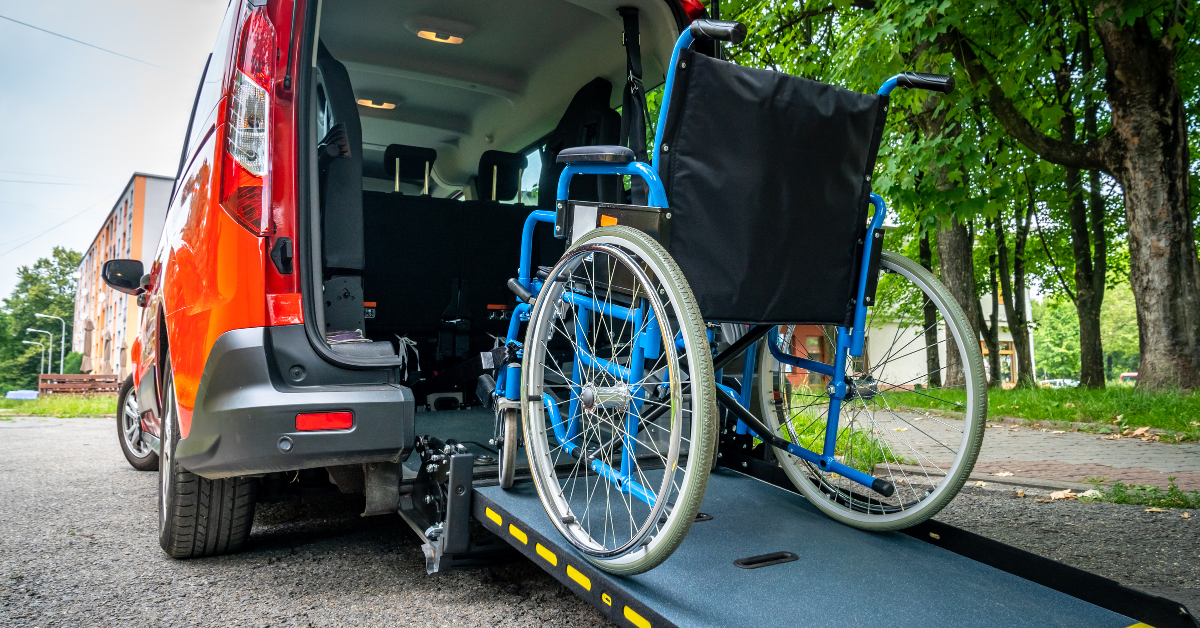
Some of the most serious NEMT injuries happen in a van that never hits anything. A sudden stop or sharp turn can throw an unsecured passenger to the floor.
Unsecured Wheelchairs and Sudden Stops
Georgia’s NEMT Policy Manual requires drivers to confirm that wheelchairs and wheelchair passengers are properly secured before the van moves, and a driver with one confirmed securement failure has to come off the road until completing securement training. The manual also requires vehicles to meet federal ADA rules. Those rules call for using the vehicle’s securement system and having staff help riders with securement systems, ramps and lifts when needed or requested. They also require a seat belt and shoulder harness for each wheelchair position (49 CFR 37.165 and 38.23).
National data shows how common the problem is. An NHTSA study of 1991 to 1995 injury data estimated that about 1,500 wheelchair users a year were hurt or killed in motor-vehicle-related incidents, with improper or no securement involved in 35 percent of those cases. These are national estimates of people treated in hospital emergency departments, not Georgia data. Our post on wheelchair securement injuries in transport vans covers these claims in detail.
Lifts, Ramps and Getting On and Off
The manual also requires drivers to give passengers support and directions on wheelchair lifts and to help them as needed to or from the main door of their destination. Georgia courts have long applied a carrier’s heightened duty to passengers who are in the act of getting off a vehicle (Metts v. Louisville & Nashville R.R., 1935).
Which Insurance Pays

Georgia’s rules make the insurance picture for medical transport vans different from trucks, buses or rideshare cars. Our post on who pays after a Medicaid van accident walks through each source.
The Transportation Company’s Policy
DCH’s policy manual requires transportation providers to show “adequate” insurance for vehicles and drivers. Coverage amounts vary by company, so identifying the actual policy early matters.
No Direct Lawsuit Against the Van’s Insurer
Georgia generally does not allow a direct lawsuit against a medical transport van’s insurer. Many of these vans fall outside Georgia’s motor carrier definition. The definition excludes vehicles that can carry no more than ten people and serve only to take elderly or disabled passengers to and from medical care or prescription pickups (O.C.G.A. § 40-1-100(12)(B)(vii)). In Mornay v. National Union Fire Insurance Co. (2015), the Court of Appeals applied that exclusion to a Medicaid transport van and barred a direct claim against the broker’s insurer. For causes of action accruing on or after July 1, 2024, you can join even a motor carrier’s insurer only in limited situations, such as when the carrier is insolvent or you cannot serve it with the lawsuit. In practice, you bring the claim against the company and driver, and their insurer handles it.
Your Own Uninsured Motorist Coverage
Under O.C.G.A. § 33-7-11, the van’s uninsured motorist coverage can cover a passenger as a guest if the van’s policy includes it. So can the passenger’s own policy or that of a spouse or relative they live with. Georgia’s default coverage adds to the at-fault driver’s limits. Learn more about uninsured motorist coverage in Georgia.
Medicaid’s Right to Be Repaid
If Medicaid paid for your treatment, DCH has a lien and a right to be repaid from your recovery (O.C.G.A. §§ 49-4-148 and 49-4-149). Federal law limits that recovery to the part of a settlement that represents medical care (Arkansas DHHS v. Ahlborn, 2006; Gallardo v. Marstiller, 2022). Our guide to Medicare and Medicaid liens in Georgia explains the process.
Evidence That Matters
In a Georgia medical transportation accident, much of the key evidence sits with the broker and the transportation company, and some of it can disappear if no one asks for it early.
Trip and Dispatch Records
The broker’s trip records can show who requested the ride, which company and vehicle were assigned, and the scheduled and actual pickup times.
Driver and Vehicle Records
Georgia’s NEMT manual requires drivers to be at least 21 with a valid license, to meet criminal history and driving record standards, and to complete driver training that includes passenger assistance, along with first aid training. The broker must inspect vehicles before they enter service and every six months. Training files, driving records and inspection reports can show whether the company followed those rules.
Incident Reports and Video
Under the manual, the broker must report all incidents to DCH immediately. Ask for the incident report, and send written requests to preserve any in-vehicle camera footage before the system records over it.
Georgia Rules for Every Claim
Filing Deadline
You generally must file a Georgia injury lawsuit within two years (O.C.G.A. § 9-3-33), and a wrongful death claim generally within two years of the death. If a city, county or other government agency operated the vehicle, a written notice of claim may be due much sooner, in as little as six months. Read more about Georgia filing deadlines.
Shared Fault
Under O.C.G.A. § 51-12-33, your recovery is reduced by your share of fault, and you recover nothing if you are 50 percent or more at fault. See whether you still have a case if you were partly at fault.
Releases When Several Parties Are Involved
When a claim involves a transportation company, a broker and another driver, the wording of a release decides who you are releasing. Read general vs. limited releases in Georgia before signing anything.
Medical Liens
Hospitals can also assert liens on injury recoveries in Georgia, though a provider that accepted Medicaid payment generally must treat it as payment in full. See hospital liens in Georgia personal injury settlements.
Frequently Asked Questions
Can I sue Verida or Modivcare if I was hurt on a Medicaid ride?
Possibly. Brokers usually do not drive, so the transportation company and its driver are the usual parties responsible. A broker can be responsible if it controlled how the provider did the work or broke its own duties, which depends on the facts.
Who pays my medical bills after a Medicaid transport van crash?
While your claim is pending, Medicaid generally pays for covered treatment after any other health coverage you have, such as Medicare. The at-fault party’s insurance pays the injury claim, and Medicaid recovers its share from the medical-care part of the recovery.
Do I have a claim if the van never crashed?
You may. Falls caused by an unsecured wheelchair, hard braking or a lift accident can support a claim against the transportation company.
How long do I have to file an NEMT injury claim in Georgia?
Generally two years from the injury, and two years from the death for a wrongful death claim. Some exceptions apply, so do not wait.
Should I report the incident to DCH?
You can report a problem with a ride to the DCH Member Contact Center at 1-866-211-0950. A complaint does not start an injury claim or pause the filing deadline.
Talk With an Atlanta NEMT Attorney
If you or a family member was hurt on a medical transportation ride in the Atlanta area, our Atlanta non-emergency medical transportation accident attorney page explains how Jonathan Flack handles these claims. Before founding the firm, he spent two and a half years on the insurance side of commercial truck and medical transport van cases. Request a free consultation or call (678) 653-0309.
Contact Us

Do not let insurance companies control the outcome of your injury claim. Call Flack Injury Law today at (678) 653-0309 or contact us through our secure online form to schedule your free case review. The sooner you reach out, the sooner we can begin protecting your rights and fighting for the compensation you deserve.