
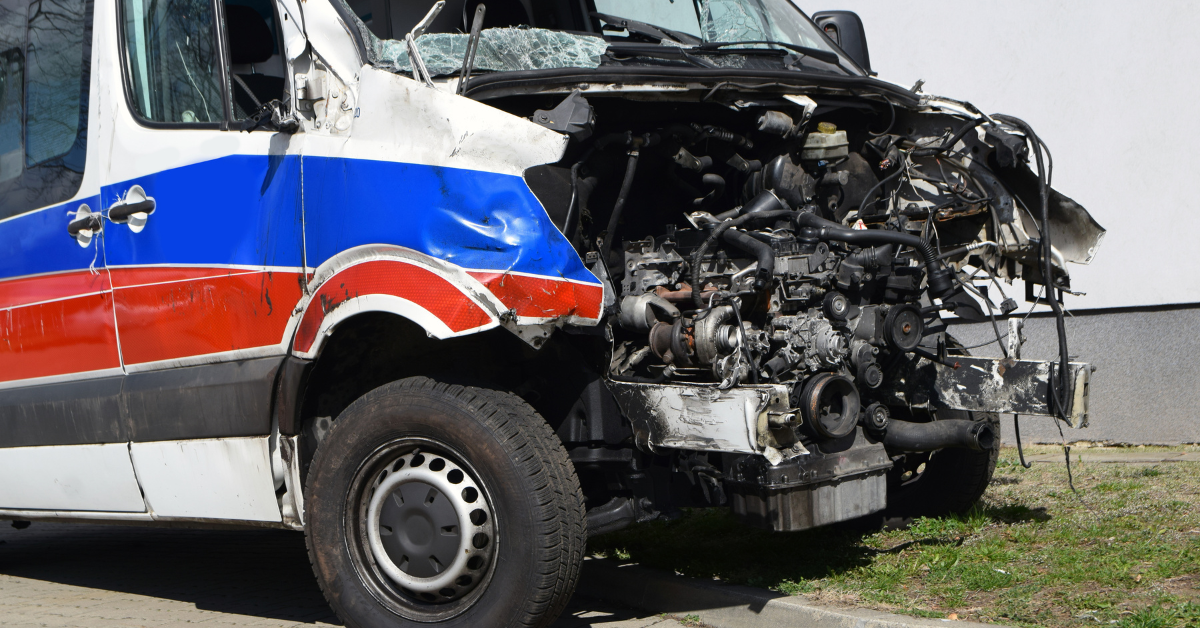
After a dialysis transport van accident, get medical care, call your dialysis center, and write down the trip details before you forget them. Many Georgia dialysis patients ride Medicaid transport vans several times a week, so a single crash can disrupt both your health and your treatment schedule. Georgia generally gives you two years to file an injury lawsuit (O.C.G.A. § 9-3-33), but evidence and trip records are easiest to get in the first weeks. Here is what to do, step by step, and how the claim works.
Why Dialysis Patients Ride Medical Transport Vans So Often
In-center hemodialysis usually happens three times a week, and each session lasts about four hours, according to the National Institute of Diabetes and Digestive and Kidney Diseases (NIDDK). That adds up to many rides every month.
For Georgia Medicaid members, those rides often come through non-emergency medical transportation (NEMT). Federal rules require state Medicaid plans to ensure necessary transportation to and from providers (42 CFR 431.53). The Georgia Department of Community Health (DCH) says NEMT is for members with no other means of transportation, and only to Medicaid-covered services (Georgia Medicaid).
Here is how the system works in Georgia:
- The broker. DCH says Verida has been the broker for all five Georgia NEMT regions since April 1, 2026. Before that, Modivcare served the Central, East, and Southwest regions.
- The transport company. The broker assigns each trip to a local transport company, which supplies the van and driver.
- Booking. In most cases, rides must be scheduled at least three business days ahead.
- Rides after treatment. DCH’s NEMT policy manual lists dialysis among treatments that can leave an ambulatory rider unable to travel without physical help. In that case, a ride other than a minibus or public transportation may be required (Section 200.12).
What to Do After a Dialysis Transport Van Accident
- Get medical care right away. Call 911 if anyone is hurt. Tell the medical team you are a dialysis patient and where your access site is. MedlinePlus, from the National Library of Medicine, says to contact your provider for bleeding from the access site, or if your hand gets cold, numb, or weak (MedlinePlus).
- Call your dialysis center. Let them know about the crash and any missed or shortened session. MedlinePlus says “it is important not to miss or skip any dialysis sessions,” and that because many centers have busy schedules, you may not be able to make up time if you are late.
- Get the crash report number. Georgia drivers must notify police immediately after a crash with an injury (O.C.G.A. § 40-6-273). Ask the officer for the report number and the agency’s name.
- Write down the trip details. Note the van company’s name, the vehicle number, the driver’s name, and the pickup and crash times. Take photos if you can do so safely.
- Ask the broker for the trip’s reference number. DCH’s manual requires the broker to give each ride request a unique transaction identification number and record which transport company got the trip (Section 100.4).
- Keep your records together. Save ride confirmations, medical bills, dialysis center notes about missed sessions, and any letters from insurers.
- Be careful with insurance calls. Do not give a recorded statement to the transport company’s insurer. Our guide to handling calls from insurance adjusters explains what to say.
Hurt in a crash? Talk with Jonathan Flack.
Free consultation. No fee and no case costs unless we recover money for you.
Texts go straight to attorney Jonathan Flack and his paralegal, Vashti. Calls are answered 24/7.
Injuries That Hit Wheelchair Users and Medically Fragile Riders Hardest
Many dialysis riders use wheelchairs or feel weak after treatment. That makes some injuries more likely, even in a van that never hits anything.
Securement Failures
Federal ADA rules require transportation providers, public and private, to use the vehicle’s securement system for wheelchairs (49 CFR 37.165(a), (c)). The system must keep an occupied wheelchair from moving more than 2 inches in any direction under normal operating conditions (49 CFR 38.23(d)(5)). A seat belt and shoulder harness must also be provided for each wheelchair position (49 CFR 38.23(d)(7)).
Georgia Medicaid policy adds more. Drivers must confirm that wheelchairs and wheelchair riders are properly secured before the vehicle moves (DCH NEMT Policies and Procedures Manual, revised July 1, 2022, Section 300.5(12)). A driver with one confirmed failure to properly secure a member’s wheelchair must stop providing rides (Section 300.5(16)). The driver may return only after the transport company gives the broker proof that the driver was properly trained on securement devices.
Falls on Lifts and Ramps
Loading and unloading can be just as dangerous as the drive. For lift-equipped vehicles covered by federal accessibility standards, those standards require:
- Lift controls interlocked so the vehicle cannot move when the lift is not stowed (49 CFR 38.23(b)(2)).
- Barriers on the lift platform to keep wheelchair wheels from rolling off (49 CFR 38.23(b)(5)), and handrails on two sides (49 CFR 38.23(b)(13)).
- Ramp side barriers at least 2 inches high (49 CFR 38.23(c)(4)).
Staff must assist riders with lifts, ramps, and securement where necessary or on request (49 CFR 37.165(f)). DCH’s manual also requires drivers to help riders who use the wheelchair lift, and to give help as needed to or from the main door of the destination (Sections 300.5(10), 300.5(13)).
Sudden Stops and Sharp Turns
Hard braking can throw an unsecured or weakened rider forward or to the floor. These are injury claims too, even without a collision. Our Atlanta non-emergency medical transportation accident attorney page covers more of these scenarios.
Missed Dialysis Sessions and Your Claim
A crash that causes you to miss or shorten dialysis can affect your health. NIDDK notes that fluid builds up in the body between hemodialysis treatments. That is one reason dialysis centers stress not missing sessions.
If a crash disrupted your treatment, the extra care that followed may be part of your damages. Your dialysis center’s records are often the clearest proof of what you missed and what it took to recover. Ask your care team to document any changes in your treatment after the crash.
DCH says urgent care trips may be arranged more quickly, valid urgent care requests are honored within three hours, and the broker’s call center runs 24/7 for “Where’s My Ride” and hospital discharges (Georgia Medicaid NEMT FAQs). To check on a ride, call your broker and press option 2.
How to Report a Problem to the Broker or DCH
You have the right to file a complaint or report an incident about your transportation, and DCH’s manual says members may do so without fear of retaliation (Section 200.8b). DCH lists these options:
- Call the broker directly. DCH lists Verida’s Quality Assurance and Utilization Review line as 678-510-4513.
- Call the DCH Member Contact Center at 1-866-211-0950.
- Contact DCH at 404-651-6911 or 404-656-4646.
Under the manual, the broker must respond to you verbally within 24 hours and send DCH a written record of its findings within five business days (Section 300.17). Brokers must also report all incidents to DCH immediately upon discovery. A complaint does not start an injury claim or pause your filing deadline.
Who Pays After a Dialysis Transport Van Accident
Several sources may apply:
- Another driver’s insurance, if someone else caused the crash.
- The transport company’s commercial policy. DCH’s manual requires the broker’s contract with each transport company to include “evidence of adequate insurance for vehicles and drivers” but does not set a dollar amount (Section 100.1(20)).
- Your own uninsured motorist coverage, which may help when the at-fault driver has too little insurance (O.C.G.A. § 33-7-11). See uninsured motorist coverage in Georgia.
- Medicaid, for covered medical care. DCH may then seek reimbursement from the party responsible for the injury (O.C.G.A. § 49-4-148).
DCH says the broker must allow one escort, age 18 or older, to ride free when medically necessary (Georgia Medicaid NEMT FAQs). A family member hurt in the same crash may have a claim of their own. Our Georgia non-emergency medical transportation accident attorney page explains brokers and insurance in more depth.
Deadlines and Fault Rules
Georgia generally allows two years from the injury to file a lawsuit (O.C.G.A. § 9-3-33). If a city vehicle was involved, written notice is due within six months (O.C.G.A. § 36-33-5). For a county vehicle, claims must be presented within 12 months (O.C.G.A. § 36-11-1).
Under Georgia’s comparative fault rule, damages are reduced by your share of fault, and you recover nothing if you are 50% or more at fault (O.C.G.A. § 51-12-33). If a loved one died after a transport van crash, see our guide to medical transport van wrongful death and catastrophic injury claims in Georgia.
How Flack Injury Law Helps Dialysis Patients and Families
Flack Injury Law is an Atlanta firm in Midtown that represents people hurt in medical transport van crashes. Founding attorney Jonathan Flack has been licensed in Georgia since 2016. Before founding the firm, he spent two and a half years on the insurance side of commercial truck, tractor-trailer and medical transport van cases. He keeps a limited caseload, works directly on every case, and speaks Spanish with clients without an interpreter.
Frequently Asked Questions
Get medical care and tell the medical team you are a dialysis patient. Then call your dialysis center about any missed session. Write down the van company, vehicle number, and driver, and ask the broker for the trip’s reference number.
In-center hemodialysis usually happens three times a week, about four hours each time (NIDDK). Georgia Medicaid’s NEMT program provides rides to covered services for members with no other means of transportation. In most cases, rides must be booked at least three business days ahead.
Possibly. Injuries from an unsecured wheelchair, a sudden stop, or a fall on a lift or ramp can support a claim. Federal rules set securement and lift standards (49 CFR 37.165, 38.23), and Georgia Medicaid requires drivers to confirm wheelchairs are secured before the van moves.
More Questions About Dialysis Transport Crashes
Call the broker directly or the DCH Member Contact Center at 1-866-211-0950. Under DCH’s NEMT manual, the broker must respond within 24 hours and report its findings to DCH within five business days. A complaint does not pause your deadline to file a claim.
It depends on who caused the crash. The other driver’s insurer, the transport company’s commercial policy, or your own uninsured motorist coverage may apply. If Medicaid pays, DCH may seek reimbursement from the responsible party (O.C.G.A. § 49-4-148).
Generally two years from the injury (O.C.G.A. § 9-3-33). If a city or county vehicle was involved, written notice may be due within six or 12 months (O.C.G.A. §§ 36-33-5, 36-11-1).
Talk to a Georgia Lawyer About Your Dialysis Transport Van Accident
If you or a family member was hurt on the way to or from dialysis, Jonathan Flack can review what happened, request the trip and incident records, and explain your options in English or Spanish. Consultations are free.
There is no fee and no case cost unless the firm recovers money for you. Call Flack Injury Law at (678) 653-0309 or contact us online.

Get a Free Case Review From Jonathan Flack
Tell us what happened. Jonathan represents injured people only, and he works directly on every case. You pay no fee and no case costs unless we recover money for you.
Texts go straight to attorney Jonathan Flack and his paralegal, Vashti. Calls are answered 24/7.
“I contacted Jonathan, who immediately responded and visited with us the next day.” Leonard Freedman, client’s husband
Read our Google reviews · See case results
Related Guides
- Atlanta Medical Transport (NEMT) Accident Attorney
- Georgia NEMT Accident Claims: Laws, Insurance and Deadlines
- Who Pays After a Medicaid Van Accident in Georgia?
- Hurt on a Medicaid Ride in Georgia? When You Can Sue Verida or the Transport Company
- Hurt Because a Wheelchair Wasn’t Secured in a Transport Van? Your Rights in Georgia
See all our guides for people hurt in Georgia crashes.
This article is general information about Georgia law, not legal advice for any specific situation. Laws change and outcomes depend on facts particular to each case. Reading this page or contacting Flack Injury Law through this website does not create an attorney-client relationship. Do not send confidential information until an attorney-client relationship has been established.