
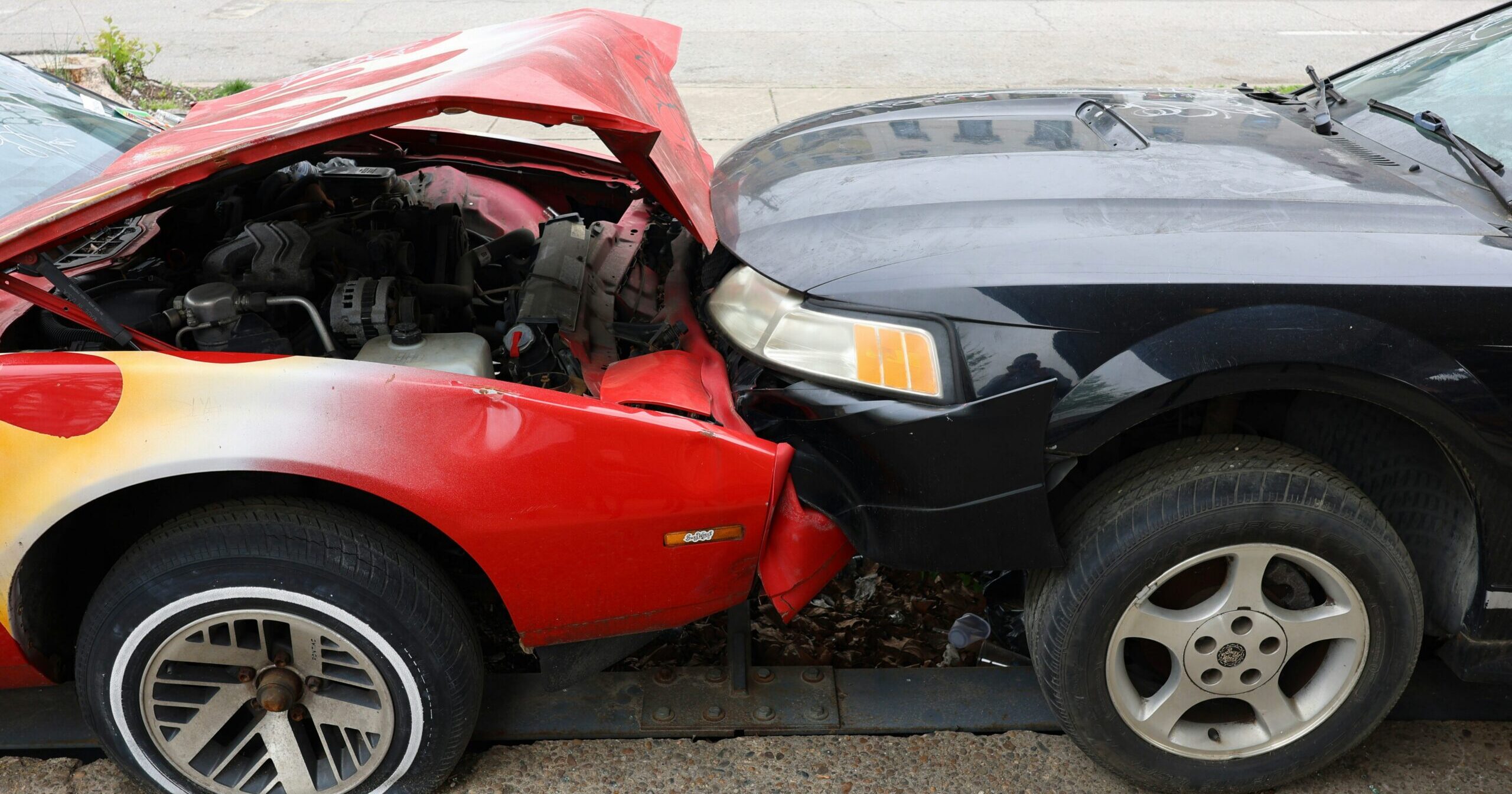
Who this is for: people who were injured in a crash and are being told they caused it, or share the blame. If you weren’t hurt and you’re being sued or got a ticket, see the questions at the bottom of this page.
In Georgia, being partly at fault for a crash does not automatically end your claim. Under the state’s modified comparative negligence rule, codified at O.C.G.A. § 51-12-33, you can still recover damages as long as you are found less than 50 percent responsible, though your compensation is reduced by your share of the fault.
What matters more than most people expect: the insurance adjuster’s opinion about fault is not a legal finding. It is one party’s position, and it is frequently wrong.
How Does Fault Work in a Georgia Car Accident Claim?
Georgia follows a system called modified comparative negligence. Rather than asking a single yes-or-no question about who caused the crash, it assigns each party a percentage of responsibility.
Two things follow from that percentage:
- If you are less than 50 percent at fault, you can recover, but your damages are reduced by your percentage. Found 20 percent responsible on a $100,000 claim, you recover $80,000.
- If you are 50 percent or more at fault, you recover nothing.
This differs from the rule in some neighboring states, which is one reason general advice you find online may not apply to a Georgia crash. If you were injured anywhere in the state, our Georgia car accident attorney page covers how we approach these claims.
Is the Insurance Adjuster’s Fault Decision Final?
No. An adjuster works for the insurance company, and the company’s financial interest runs directly against yours. Assigning you a larger share of fault reduces what they pay, and in Georgia it can eliminate the payment entirely if they can push you to 50 percent.
An adjuster’s determination is not a court finding and carries no legal force. It can be challenged with evidence: scene photographs, witness statements, vehicle damage patterns, traffic camera footage, and cell phone records where distraction is at issue.
The practical problem is timing. Much of that evidence disappears within days. It also helps to understand how insurance adjusters approach these calls before you speak with one.
What About the Police Report? Does It Decide Fault?
A police report is evidence, not a verdict. The responding officer arrives after the crash, works from whatever is visible and whatever the parties say, and forms an opinion under time pressure.
In Georgia, parts of a police report, such as what the officer personally observed at the scene, can be admitted at trial (Maloof v. MARTA, Ga. Ct. App. No. A14A2233, 2015). But the officer’s conclusion about who caused the crash is not binding, and it can be challenged with other evidence. Insurers lean heavily on these reports during the claims process, so it is worth getting a copy of yours early and checking it for mistakes.
If the report contains factual errors, such as the direction of travel or the position of the vehicles, those can sometimes be corrected. Contact the reporting agency and ask about their amendment process.
I Said “I’m Sorry” at the Scene. Did I Admit Fault?
Probably not in the way you fear, but it can be used against you.
Statements made at the scene can be introduced as admissions. An apology is a human reflex, not a legal conclusion, and it is not the same as a finding of negligence. But an adjuster will absolutely quote it back to you.
What matters more is the physical evidence. Skid marks, impact points, and vehicle damage tell a story that does not depend on what anyone said while shaken and standing in traffic.
If you have already given a recorded statement, that is not fatal either. It is a reason to get advice before giving another one.
What If Both Drivers Were Partly at Fault?
This is more common than clean single-fault crashes, particularly at intersections and in lane-change collisions.
Georgia’s system is built for exactly this. Each party is assigned a percentage, and the percentages must total 100. A jury, or a negotiation that anticipates what a jury would do, sorts out the allocation.
Common scenarios where fault gets split:
- One driver runs a light while the other is speeding
- A left-turning driver misjudges a gap while the oncoming driver is distracted
- A rear-end collision where the front driver’s brake lights were out
- A lane-change crash where both drivers moved toward the same space
Intersection and lane-change crashes are among the most frequently disputed cases our Atlanta car accident attorney handles.
When the other driver carries minimum limits, a reduced recovery can fall short of your bills entirely. That is where uninsured and underinsured motorist coverage becomes the real question.
If a commercial truck, an Uber or Lyft, or a medical transport van was involved, far more insurance is often available. Georgia requires at least $1 million in liability coverage while a rideshare driver is on a trip (O.C.G.A. § 33-1-24), and for-hire trucks hauling general freight across state lines must carry at least $750,000 (49 C.F.R. § 387.9). See our truck accident, Uber and Lyft accident and medical transport accident pages.
Neck and back injuries are the most commonly disputed in these cases. Our page on whiplash injury claims in Atlanta covers how insurers argue them down.
Be Careful About Settling Early
When you believe the crash was your fault, there is a strong pull toward accepting whatever is offered and putting it behind you. That instinct is what insurers count on.
An early offer arrives before anyone knows the full extent of your injuries, and accepting it means signing a release. Before you do, understand what a release actually gives up, because once a general release is signed you usually cannot reopen the claim, even if your condition worsens.
How Long Do I Have to Act?
Georgia’s statute of limitations for personal injury is generally two years from the date of the injury. Claims against a city, county, or state entity carry much shorter notice deadlines, sometimes as little as six months, so those cases need attention immediately.
Two years sounds like a long time. It is not, because the evidence that establishes fault degrades long before the deadline. Witnesses move and forget, surveillance footage can be overwritten within days or weeks, and vehicles get repaired or scrapped.
If you were told the crash was your fault and you accepted that, the clock has still been running.
Our post on the time limits that apply to Georgia injury cases covers the deadlines in more detail, including the shorter ones for government claims.
Should I Talk to a Lawyer If I Was Hurt but Am Being Blamed?
If you were injured, yes, and arguably more urgently than if fault were clear.
When fault is obvious, the dispute is usually about the value of the claim. When fault is contested, the dispute is about whether you recover at all, and the difference between 45 percent and 50 percent responsibility is the difference between a real recovery and nothing.
A reduced share of a well-documented claim can still be worth more than a full share of a poorly documented one. Our post on how case value gets calculated covers what goes into the number.
At Flack Injury Law, you work directly with Jonathan Flack. That matters in fault disputes, where the analysis depends on small details.
Call or text (678) 653-0309. There is no cost to talk, and no fee unless we recover. If you want to understand your options before contacting a firm, the State Bar of Georgia publishes free resources for the public.
Frequently Asked Questions
Can I still sue if I was partly at fault in Georgia? Yes, provided you are found less than 50 percent responsible. Your recovery is reduced by your percentage of fault.
Who decides what percentage of fault I have? If the case settles, it is negotiated between the parties. If it goes to trial, the jury assigns the percentages. An insurance adjuster’s opinion is neither of those things.
I wasn’t hurt, but I’m being sued or got a ticket after a crash. Can Flack Injury Law help? No. We represent injured people only. If you’ve been served with a lawsuit, send the papers to your auto insurer right away; Georgia auto policies must require that notice, and a late notice that prejudices the insurer can cost you your defense and coverage (O.C.G.A. § 33-7-15). The Atlanta Bar Association’s Lawyer Referral and Information Service can connect you with a defense or traffic lawyer.
What if the other driver’s insurer says I was 100 percent at fault? That is a negotiating position, not a determination. It can be contested with evidence, and it frequently is.
Should I give a recorded statement to the other driver’s insurance company? Speak with an attorney first. You are not obligated to give one, and the questions are often designed to elicit statements about fault.
This article is general information about Georgia law, not legal advice for any specific situation. Laws change and outcomes depend on facts particular to each case. Reading this page or contacting Flack Injury Law through this website does not create an attorney-client relationship. Do not send confidential information until an attorney-client relationship has been established.