
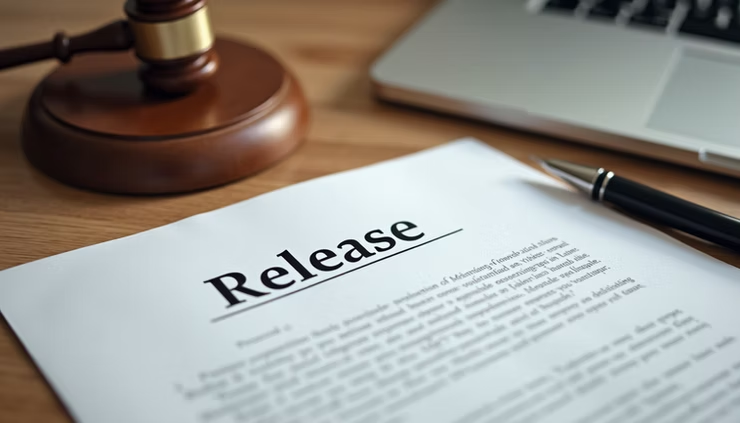
Releases in personal injury settlements in Georgia are among the most important — and most misunderstood — documents you will sign. This legal agreement plays a crucial role in finalizing your case and determining your rights after the settlement. Understanding what a release is, how it works, and what it means for you can help you make informed decisions during the settlement process.
If you are earlier than that and still deciding whether you have a claim, our post on the signs you may have a personal injury case covers what to look for.
This is the trap with injuries that develop slowly. Whiplash symptoms often do not peak for days or weeks after a crash, which means an early settlement offer can arrive before you know what you are actually dealing with.
The pull toward signing is even stronger when you believe the crash was partly your fault. It usually is not that simple. Georgia’s comparative negligence rule means partial fault does not automatically end your claim, and signing a release before you understand that can cost you a recovery you were entitled to.
What Are Releases in Personal Injury Settlements in Georgia?
A release is a legal contract between the injured party (the claimant) and the party responsible for the injury (the defendant or their insurance company). By signing this document, the claimant agrees to give up any future claims related to the injury in exchange for a settlement payment.
In simple terms, the release ends the legal dispute. Once signed, you cannot sue the defendant again for the same injury or accident. This agreement protects the defendant from further liability and allows both sides to move forward.
Why Is a Release Necessary?
Settlements aim to resolve disputes without going to trial. The release ensures that the settlement is final and binding. Without it, the defendant risks facing additional lawsuits for the same incident, which could lead to more expenses and legal complications.
For the injured person, the release confirms that they will receive the agreed-upon compensation. It also clarifies the scope of the settlement, so both parties understand what claims are covered.
Key Elements of a Release in Georgia
A typical release in a personal injury settlement includes several important components:
- Parties involved: Names of the claimant and the defendant.
- Description of the claim: Details about the injury or accident being settled.
- Settlement amount: The sum the claimant will receive.
- Release of claims: A statement that the claimant waives any future claims related to the incident.
- Effective date: When the release takes effect.
- Signatures: Both parties must sign to make the release valid.
Georgia law requires that releases be clear and specific. The language should leave no doubt about what claims are being released.
Types of Releases You May Encounter
There are different types of releases depending on the scope of the settlement:
- General Release
This type covers all claims related to the incident, including known and unknown injuries. It offers broad protection to the defendant.
- Limited Release
In Georgia, a limited release is a specific statutory instrument under O.C.G.A. § 33-24-41.1. It lets you accept the at-fault driver’s policy limits while preserving a claim against your own underinsured motorist coverage. This is covered in detail below.
- Partial Release
Sometimes, a claimant may settle part of their claim and release only certain parties or issues, keeping other claims open.
Choosing the right type of release depends on your case details and settlement goals.
What to Watch Out for Before Signing a Release
Signing a release is a serious decision. Once signed, you lose the right to sue for the same injury. Here are some important tips:
- Read carefully: Understand every clause and what claims you are giving up.
- Consult a lawyer: A personal injury attorney can explain the legal terms and advise if the settlement is fair.
- Check for future medical needs: If your injury may require ongoing treatment, make sure the settlement covers those costs. This is especially important with soft tissue injuries like whiplash, where symptoms often persist long after an early settlement offer arrives.
- Confirm all parties are included: Ensure the release names all responsible parties to avoid future claims.
- A limited release that misses even one statutory requirement can cost you your UM claim; see general vs. limited releases in Georgia.
If you sign without fully understanding the release, you might miss out on compensation for future damages or related claims.
Most of what shapes a release happens before it arrives. Our post on calls from insurance adjusters covers what those conversations are actually for.
How Releases Affect Your Settlement Amount
The release protects the defendant by preventing future lawsuits. Because of this, defendants and insurance companies often require a release before paying the settlement.
In some cases, the scope of the release can influence the settlement amount. For example, a general release that covers all claims might result in a higher payment than a limited release. This is because the defendant wants to avoid any future liability.
Your attorney can help negotiate the terms of the release to balance protection for the defendant with your right to fair compensation.
The settlement figure is also not what reaches you. Medical providers can claim part of it, and our post on hospital liens in Georgia covers what they can and cannot take.
Example of a Release Scenario in Georgia
Imagine you were injured in a car accident caused by another driver. After medical treatment and lost wages, you agree to settle for $50,000. Before receiving the money, you must sign a release.
The release states you will not sue the driver or their insurance company for any injuries related to the accident. It covers all damages, including medical bills, pain and suffering, and lost income.
Once signed, you receive the settlement check. If later you discover a new injury from the accident, you cannot file another claim because the release covers all related claims.
What Happens If You Don’t Sign a Release?
Without a signed release, the defendant is unlikely to pay the settlement. The release is the legal proof that you have accepted the settlement and waived future claims.
If you refuse to sign, the case may proceed to trial, which can be costly and time-consuming. Alternatively, you might negotiate different terms or a higher settlement before signing.
Time pressure is part of why people sign early. Knowing how long these claims typically take makes it easier to judge whether an offer is worth taking.
What Is a Limited Release, and Why Does It Matter in Georgia?
Georgia has a second kind of release that most people never hear about until it is too late.
Under O.C.G.A. § 33-24-41.1, enacted in 1992, an injured person can accept the at-fault driver’s policy limits and sign a limited release rather than a general one. The difference is significant: a general release ends your claim entirely, while a properly executed limited release lets you take the at-fault driver’s insurance money and still pursue your own underinsured motorist coverage for what remains.
The release has to match the statute exactly, and Georgia courts require strict compliance. In Barker v. Muschett (Ga. Ct. App., June 2, 2025), the injured driver settled for the at-fault driver’s full $25,000 policy limits and signed a release that excepted other available insurance coverage. But the release never released the settling insurance carrier, which § 33-24-41.1 requires, and the Court of Appeals held that it did not preserve her uninsured motorist claim. We explain what Barker v. Muschett means for your limited release and the two conditions every Georgia limited release has to meet.
This matters because Georgia’s minimum liability coverage is $25,000 for one person’s injuries. In a serious crash, that figure is often a fraction of the actual damages. Without a limited release, accepting that $25,000 can mean giving up a much larger claim against your own policy.
The statute also protects your right to do this. A UM policy issued in Georgia cannot prohibit you from settling with the liability carrier, and it cannot require your UM insurer’s permission first.
Whether that coverage is worth pursuing depends on how much of it you have and which type. Our post on uninsured motorist coverage in Georgia explains the difference between add-on and reduced-by coverage.
Frequently Asked Questions
Yes. Insurance companies pay a settlement only after you sign a release. The release is the trade: you get the money, and you give up the claims it names. Read exactly which claims those are before you sign.
Rarely. Georgia courts undo a signed release only in narrow situations, usually fraud or a mistake both sides made, and you may have to give the money back. Treat the signature as final, and see what happens after you sign a release in a Georgia injury settlement.
Usually, yes. Most releases cover every claim from the accident, known or unknown, including future medical bills. That is why it pays to wait until your doctors know the full extent of your injuries.
A general release ends every claim tied to the accident, including your own underinsured motorist claim. A limited release accepts the at-fault driver’s policy limits while keeping that claim alive. Read the full general vs. limited release comparison.
Often, yes. Valid hospital and medical liens are typically resolved from the settlement before you receive your share. Some can be negotiated down. See hospital liens in Georgia personal injury settlements.
It is the single cheapest protection you have. One wrong clause can cost you a claim you did not know you had. Jonathan reviews releases at no cost. Request a free consultation.
Final Thoughts on Releases in Georgia Personal Injury Settlements
A release is a critical part of settling a personal injury claim in Georgia. It finalizes the agreement and protects both parties from future disputes. Understanding what a release means and how it affects your rights can help you avoid costly mistakes.
Before signing any release, take the time to review the document carefully and seek legal advice. This ensures you receive fair compensation and fully understand the consequences of giving up your right to sue.
If you are deciding whether to hire someone, our guide to choosing a personal injury attorney in Georgia covers what to look for.
If you are involved in a personal injury settlement, knowing how releases work will help you make confident decisions and protect your interests.
Wondering what comes next once the release is signed? We walk through payment timing, lien resolution, and disbursement in what happens after you sign a release in a Georgia injury settlement.
¿Prefiere leer en español? Lea nuestra guía sobre firmar el release de la aseguranza en Georgia.
This article is general information about Georgia law, not legal advice for any specific situation. Laws change and outcomes depend on facts particular to each case. Reading this page or contacting Flack Injury Law through this website does not create an attorney-client relationship. Do not send confidential information until an attorney-client relationship has been established.