
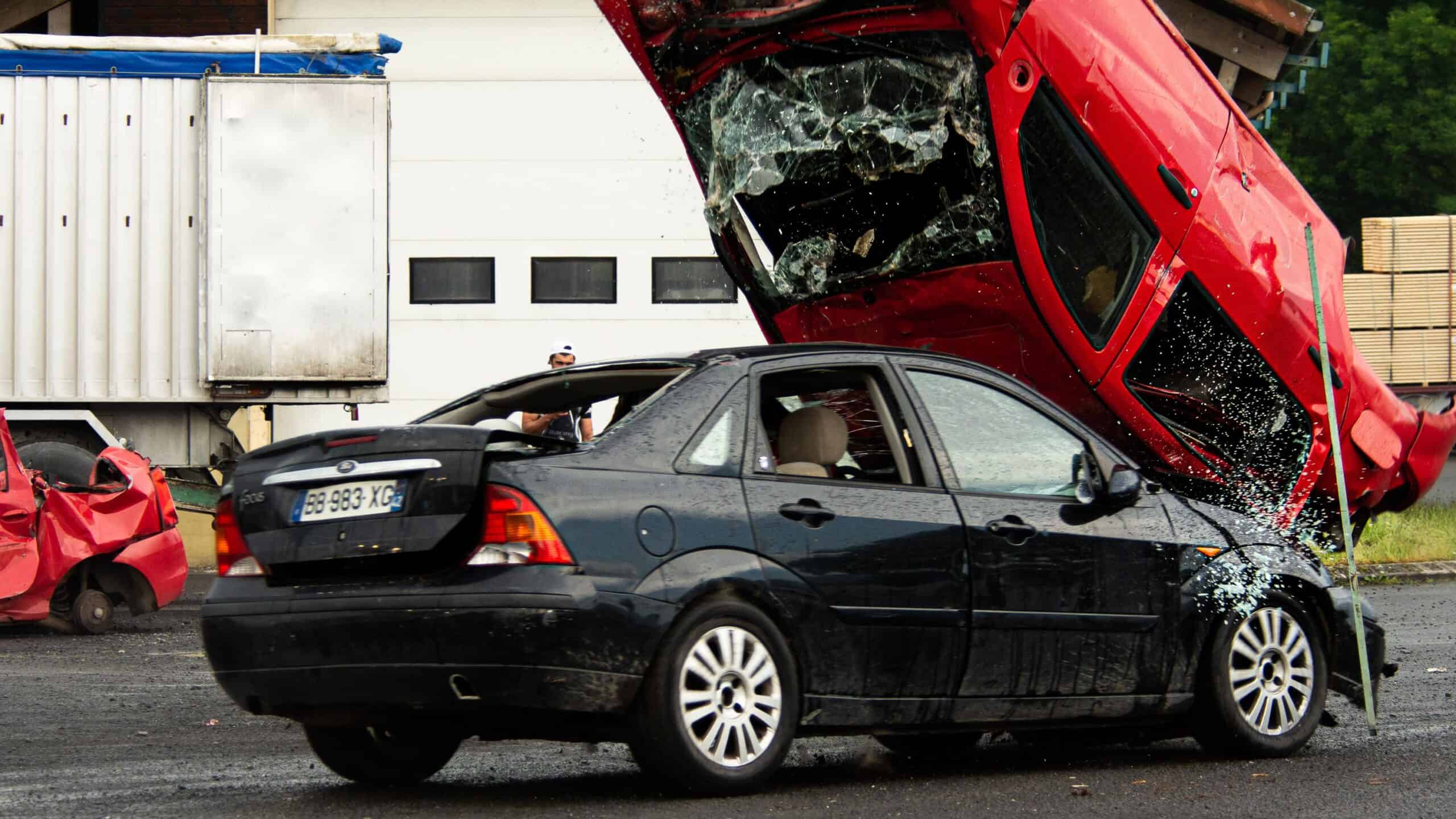
A Georgia crash report is the GDOT-523 Motor Vehicle Crash Report, the form police officers across the state use to record a wreck. It is full of boxes and number codes that can be hard to read. Insurance adjusters read it closely, so you should too. This guide walks through each part, explains how to get a copy, and shows what to do if something on it is wrong.
What Is a Georgia Crash Report?
A Georgia crash report is the official GDOT-523 form an officer fills out after a reportable wreck. The current version is marked “GDOT-523 (07/2023).” The Georgia Department of Transportation (GDOT) publishes the form, a code “overlay” that lists every code, and an instruction manual that tells officers how to fill in each box.
Georgia law requires a driver to report a crash right away when someone is hurt or killed, or when property damage appears to be $500 or more (O.C.G.A. § 40-6-273). Inside a city, the call goes to the local police. Outside a city, it goes to the county sheriff or the nearest Georgia State Patrol post. That is why your report may come from Atlanta Police, a county police department or the State Patrol.
How Is the GDOT-523 Laid Out?
The report has several sections, and each one answers a different question. Here is a quick map.
| Section | What it shows | What to check |
|---|---|---|
| Header | Agency case number, county, crash date and time, number of vehicles, injuries and deaths | The case number (you need it for everything) and the date and time |
| Location | Road, intersection or distance from it, GPS coordinates | The street names, especially on long roads like Peachtree St. |
| Unit blocks | Each driver, pedestrian or cyclist, plus vehicle, owner and insurance | Spelling, insurance company, policy number, tag and VIN |
| Codes area | Contributing factors, maneuvers, harmful events, damage, road and weather | Whether the codes match what happened |
| Citations | Citation numbers and the Georgia Code section charged | Who got a ticket and for what |
| Commercial vehicle | Carrier name, U.S. DOT number, hazardous materials | Only filled in when a truck or bus is involved |
| Narrative and diagram | The officer’s written summary and a drawing of the crash | Direction of travel, lanes and point of impact |
| Witnesses and occupants | Witness contact information, each occupant’s seat, safety equipment and injury code | Whether your witness is listed and your injury code |
| Administrative | Whether photos were taken, the reporting officer and agency | The officer’s name, so you know who to contact |
Hurt in a crash? Talk with Jonathan Flack.
Free consultation. No fee and no case costs unless we recover money for you.
Texts go straight to attorney Jonathan Flack and his paralegal, Vashti. Calls are answered 24/7.
What Do the Key Fields and Codes Mean?
Most of the report is in codes, and each code has a meaning in GDOT’s overlay. These are the fields that matter most for an injury claim.
Unit Numbers and the “Susp At Fault” Box
Each vehicle, pedestrian or bicycle gets a unit number. GDOT’s manual tells officers to number units in order, starting with Unit 1 on the left side of page 1. Being Unit 1 does not mean you caused the crash.
The “Susp At Fault” box is different. The manual tells the officer to check the box for the unit “suspected as being AT FAULT,” and to check all units if fault is unknown. Notice the word “suspected.” It is the officer’s early view, not a court ruling.
Contributing Factors
Contributing factors are the officer’s codes for why the crash happened. There are three lists: operator (driver or pedestrian), vehicle and roadway. The operator section has room for up to four codes. GDOT’s manual says listing “No Contributing Factors” for every unit is inaccurate, because every crash has at least one cause.
Common operator codes on the 2023 overlay include:
- 3: Following Too Close
- 4: Failed to Yield
- 6: Disregard Stop Sign/Signal
- 11: Changed Lanes Improperly
- 22: Too Fast for Conditions
- 28: Inattentive or Other Distraction (Distracted)
- 29: Texting (Distracted)
Vehicle codes cover problems like tire or brake failure. Roadway codes cover things like a work zone, standing water or traffic backed up from an earlier crash. That last one comes up often on I-285 and the Downtown Connector.
Injury Codes
Each person on the report gets an injury code on the “KABCO” scale.
| Code | Letter | Meaning |
|---|---|---|
| 0 | O | No Apparent Injury |
| 1 | K | Fatal Injury |
| 2 | A | Suspected Serious Injury |
| 3 | B | Suspected Minor or Visible Injury |
| 4 | C | Possible Injury or Complaint |
This code reflects what the officer saw at the scene. Many injuries, like neck, back and brain injuries, show up hours or days later. A “0” does not mean you were not hurt.
Narrative and Diagram
The narrative is the officer’s plain-language story of the crash. GDOT’s manual tells officers the narrative should support every other part of the report. Any code marked “Other” must be explained there. The diagram shows where each vehicle came from and where it stopped. Check the arrows and lanes carefully, because a wrong arrow can flip the story.
Citations and Insurance
The citation section lists ticket numbers and the Georgia Code section charged for each unit. A citation is a charge, not a conviction. The insurance lines list each driver’s insurer and policy number, or “NONE” if the driver had no coverage. If the other driver shows “NONE,” read who pays when a Georgia crash was not your fault.
How Do I Get a Copy of My Georgia Crash Report?
You can get your report online, by mail or in person, depending on which agency wrote it. Georgia law limits who can get a crash report. Anyone named in the report can get a copy, personally or through a lawyer. Other requesters must give a written “statement of need,” such as being injured in the crash, witnessing it or owning property damaged in it (O.C.G.A. § 50-18-72(a)(5)).
- Georgia State Patrol crashes: Contact the local State Patrol post or the Department of Public Safety (DPS) Open Records Unit, 959 United Ave. SE, Atlanta, GA 30316, (404) 624-7591. DPS asks you to include its DPS-536 Accident Report Release Form with the request. DPS lists crash reports at $5.00 each.
- Online through BuyCrash: GDOT directs people to BuyCrash (buycrash.lexisnexisrisk.com). You search by a last name and the crash date, plus the report number, VIN or driver’s license number. GDOT’s page does not list the online price.
- By mail from GDOT: Send GDOT’s request form to 935 United Ave. SE, Bldg 24, Atlanta, GA 30316. The form lists $5 per report, $2 more for a certified copy, payable by money order or cashier’s check. It warns that mail requests take at least two weeks. Georgia law sets a $5.00 fee for each copy of a report kept by GDOT or its designee (O.C.G.A. § 40-9-30).
- Atlanta Police Department: APD’s Open Records page sends accident report requests to BuyCrash. It also says requested records can be picked up at APD’s Central Records Unit, Monday through Friday, 8 a.m. to 2:30 p.m.
- County police: Each county sets its own process. Gwinnett County Police, for example, charges $5 for an accident report, which is usually ready four business days after the report is taken.
If you cannot find your report online, GDOT lists a customer support line at 1-866-215-2771.
What Should I Do if My Crash Report Is Wrong?
Ask the agency that wrote the report to fix it, and back up your request with proof. GDOT’s manual describes two tools. A “supplement” is an attachment that adds new information to the original report, such as later test results or occupants who were left off. A “corrected report” is a complete new report that replaces the original. The form itself has checkboxes for “Corrected Report” and “Sup To Original.”
Facts Versus Opinions
Factual errors are the easiest to fix. These include a misspelled name, the wrong tag number, the wrong insurance company or a missing witness. Bring a document that shows the correct information, such as your insurance card or registration.
Opinions are harder. The fault box, contributing factors and narrative reflect the officer’s judgment. An officer may decline to change them. If you disagree, ask the officer to add your statement or a witness’s statement in a supplement, and keep your own proof for the insurance claim.
Steps to Request a Fix
- Get a full copy of the report and note the case number.
- Mark each error and write what is correct.
- Gather proof: photos, dashcam video, your insurance card, witness names and phone numbers.
- Contact the reporting agency (the officer’s name and agency are on the report) and ask how it handles supplements or corrections.
- Put your request in writing, keep a copy and write down who you spoke with and when.
How Do Insurers and Juries Use the Crash Report?
Insurance adjusters often use the crash report as their starting point on fault. They look at the “Susp At Fault” box, the contributing factors and any citations. Fault matters a great deal in Georgia. Your damages are reduced by your share of fault, and you recover nothing if you are 50% or more at fault (O.C.G.A. § 51-12-33). Read more about partial fault in a Georgia crash.
In court, Georgia’s hearsay rules allow some public records into evidence. O.C.G.A. § 24-8-803(8) covers public records, and in civil cases it covers factual findings from a legally authorized investigation, unless the sources or circumstances show a “lack of trustworthiness.” In Maloof v. MARTA (Ga. Ct. App. 2015), the Court of Appeals held that the parts of a police report based on the officer’s own observations are admissible. The court left open whether statements from witnesses in the report would come in.
The takeaway: a crash report is evidence, not a final verdict. Photos, video, vehicle data and witness testimony can support or challenge it. If you were hurt, our step-by-step checklist after an Atlanta car accident explains what to collect.
Frequently Asked Questions
It is the GDOT-523 Motor Vehicle Crash Report, published by the Georgia Department of Transportation. The current version is dated 07/2023. It is Georgia’s uniform crash report, so city police, county police, sheriff’s offices and the State Patrol all use it.
No. GDOT’s manual tells officers to number units in order, starting with Unit 1 on the left side of page 1. The officer’s view on fault appears in the separate “Susp At Fault” box and in the contributing factors.
Mail requests to GDOT cost $5 per report, plus $2 for a certified copy, and DPS lists State Patrol crash reports at $5.00 each. Local agencies set their own process, and Gwinnett County Police charges $5 for an accident report. Online purchase through BuyCrash is available, but GDOT’s page does not list that price.
Yes. GDOT’s manual describes a supplement, which adds new information, and a corrected report, which replaces the original. Factual errors are usually easier to fix than the officer’s opinions about fault.
No. Insurers rely on it heavily, but fault in a lawsuit is decided by the evidence as a whole. Under O.C.G.A. § 24-8-803(8) and the Maloof v. MARTA decision, an officer’s own observations in the report can come into evidence. Other proof, like video and witness testimony, can support or challenge it.
Code 4, or “C,” means “Possible Injury or Complaint.” It records what the officer saw or heard at the scene. Many injuries appear later, so a low code does not mean you were not hurt.
Have Jonathan Flack Review Your Crash Report
A crash report can shape how an insurer treats your claim, so it is worth reading closely. Jonathan Flack works directly on every case at Flack Injury Law, and the consultation is free. You owe no fee and no case costs unless the firm recovers money for you. Learn more about our Atlanta car accident attorney services.
Call or text (678) 653-0309 or contact us online. Have your crash report and its case number nearby when you reach out.

Get a Free Case Review From Jonathan Flack
Tell us what happened. Jonathan represents injured people only, and he works directly on every case. You pay no fee and no case costs unless we recover money for you.
Texts go straight to attorney Jonathan Flack and his paralegal, Vashti. Calls are answered 24/7.
“I contacted Jonathan, who immediately responded and visited with us the next day.” Leonard Freedman, client’s husband
Read our Google reviews · See case results
Related Guides
- What to Do After a Car Accident in Atlanta: Step-by-Step Checklist
- Hit by Another Driver in Georgia? What to Do When the Crash Wasn’t Your Fault
- Hurt in a Crash and Blamed for It? You May Still Have a Case in Georgia
- Navigating Calls From Insurance Adjusters After a Georgia Personal Injury Accident
- Atlanta Car Accident Attorney
See all our guides for people hurt in Georgia crashes.
This article is general information about Georgia law, not legal advice for any specific situation. Laws change and outcomes depend on facts particular to each case. Reading this page or contacting Flack Injury Law through this website does not create an attorney-client relationship. Do not send confidential information until an attorney-client relationship has been established.