
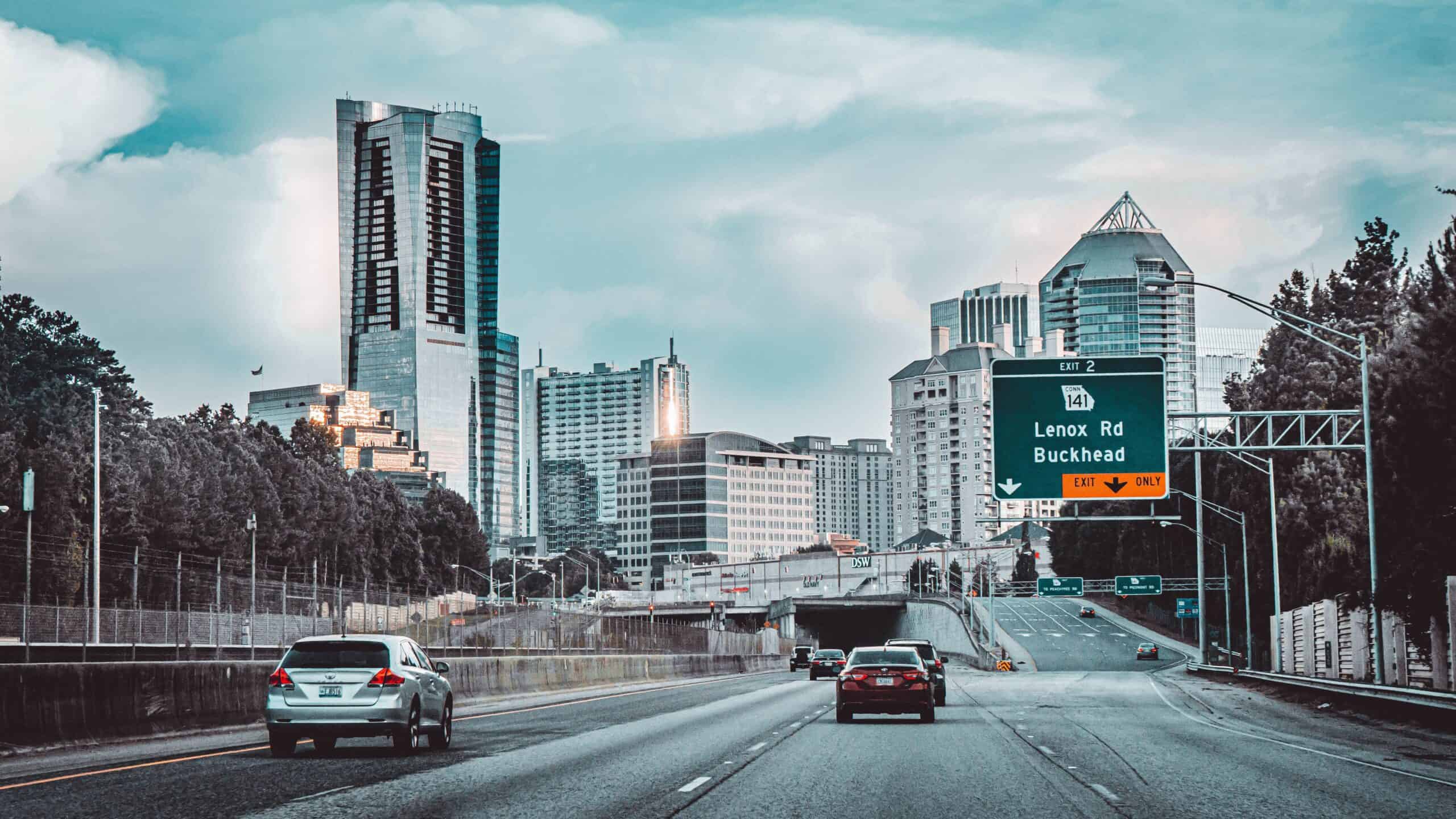
When Is Atlanta’s Traffic the Worst (and Most Dangerous)?
A new transportation study found that Wednesday between 4–6 pm is the single worst time for overall traffic in metro-Atlanta.
Why Wednesdays? Since the pandemic, hybrid work schedules have changed the flow of Atlanta commuting. Many employees now work from home on Mondays and Fridays, which dramatically reduces early-week and late-week congestion. As a result:
- Tuesdays, Wednesdays, and Thursdays now carry the heaviest traffic
- Wednesday evenings are the most congested and statistically the most crash-prone
If you must drive during mid-week rush hours, give yourself more travel time and stay alert to sudden slowdowns, rear-end collisions rise sharply during heavy stop-and-go traffic.
Traffic patterns shift with the airport. The corridors running south toward Hartsfield-Jackson carry constant rideshare, shuttle, and freight movement, which changes the crash mix in that part of the metro. If you were injured in a collision near the airport, our East Point personal injury attorney page covers how those claims typically proceed.
Speeding Barely Saves Time, But Greatly Increases Crash Severity
Most drivers believe that speeding significantly reduces travel time. The truth is, it usually doesn’t.
On a 30-mile highway trip:
- Increasing speed from 60 mph → 70 mph saves roughly 4 minutes
- But it increases crash force by 36%
That’s over one-third more impact force transferred to your vehicle and your body.
National Highway Traffic Safety Administration (NHTSA) data shows:
- Speeding contributes to nearly 30% of all traffic deaths in the U.S.
- Injury severity rises exponentially with speed: even small increases make a big difference
In many of the cases we handle, a driver was “only going a little over the speed limit,” yet the resulting injuries were far more serious than they would have been at lower speeds.
Why the End of Daylight Saving Time Brings More Car Accidents
When daylight saving time ends each November, evening commutes suddenly become darker, and more dangerous.
Multiple studies show:
- A 6–10% increase in car crashes the week after clocks change
- Higher rates of evening collisions, especially involving pedestrians
- A spike in drowsy driving, particularly during late-afternoon and early-evening hours
Shorter days also mean:
- More nighttime driving
- Reduced visibility
- Slower reaction times
To reduce risk:
- Ensure your headlights and taillights are clean and fully functional
- Reduce your speed during dark commutes
- Stay alert for pedestrians, cyclists, and sudden traffic stops
Dark roads plus heavy Atlanta traffic is a dangerous combination, especially in November and December.
If You’ve Been Injured in a Car Accident in Georgia, We’re Here to Help
Flack Injury Law is dedicated to helping Georgians recover physically, financially, and emotionally after a car accident. We focus exclusively on injury law, and we fight to secure the maximum compensation available: including medical bills, lost wages, pain and suffering, and long-term care needs.
Whether your collision happened yesterday or months ago, you can reach out anytime with questions. There’s no cost to speak with us, and no fees or case costs unless we obtain a recovery for you.
Call or text: (678) 653-0309
We’re here to help you navigate the road ahead.
: Jonathan Flack
This article is general information about Georgia law, not legal advice for any specific situation. Laws change and outcomes depend on facts particular to each case. Reading this page or contacting Flack Injury Law through this website does not create an attorney-client relationship. Do not send confidential information until an attorney-client relationship has been established.